

When comparing carpet-cleaning methods in Bellevue, it helps to know what happens beyond the rinse: how soil is loosened, how moisture is recovered, and what cleaning solutions are used around children and pets. The hot water extraction method Bellevue homeowners ask about is a rinse-and-recovery process, not steam alone. Understanding those steps can help you decide whether it suits your carpet and what to expect afterward.
Anderson Carpet & Tile Cleaning uses truck-mounted hot water extraction, including pre-treatment, a high-temperature rinse, and moisture recovery. The woman-owned, family-operated business serves Greater Seattle and the Eastside with eco-friendly, non-toxic cleaning solutions described as safe for children and pets. This guide explains how extraction works, how it compares with low-moisture methods, and what to consider when preparing for a cleaning visit.
Key Takeaways
- Hot water extraction applies cleaning solution and hot water to loosen soil, then uses equipment to recover moisture and suspended dirt.
- “Steam cleaning” is a common label, but the practical process is a rinse followed by extraction.
- Compare extraction with low-moisture methods by considering the carpet’s soil, condition, and moisture needs.
- Knowing the steps, from spot pre-treatment to moisture recovery, makes it easier to prepare for a professional cleaning visit.
What Is the Hot Water Extraction Method for Bellevue Carpets?
Hot water extraction cleans carpet by applying cleaning solution and hot water to loosen soil, then using equipment to recover moisture and suspended dirt. Although the process is often called “steam cleaning,” it is more useful to think of it as a rinse followed by extraction, rather than steam simply passing over the carpet. The Hot Water Extraction Method is a reference for the term and its common name.
Hot water extraction rinses carpet fibers with hot water and cleaning solution, then extracts much of the moisture and loosened soil. Dry vacuuming removes loose debris but does not include this rinse-and-recovery step. That distinction matters when ordinary vacuuming no longer removes soil embedded in the fibers.
For Bellevue carpet care, the central idea is straightforward: loosen, rinse, recover. Moisture recovery removes much of the rinse water, but it does not leave the carpet immediately dry.
How the rinse-and-recovery process works
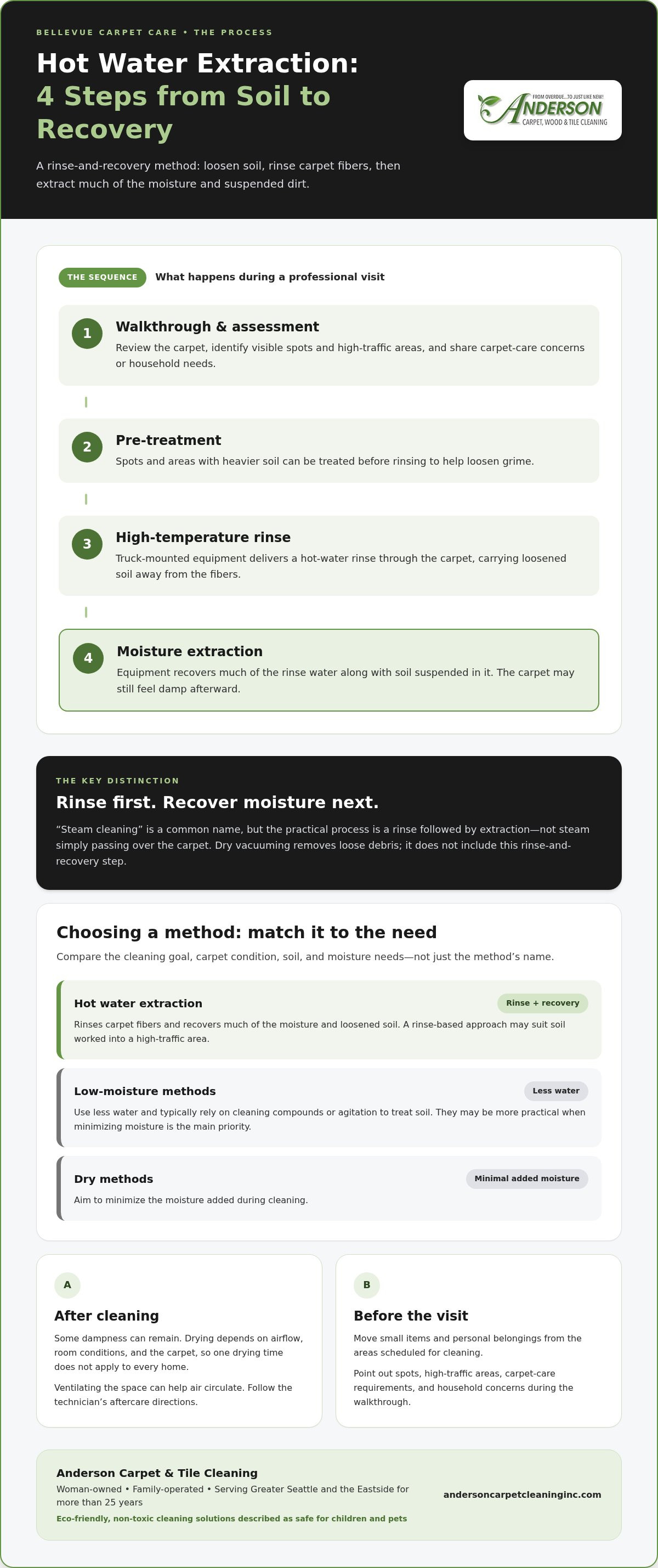
A professional visit begins with an assessment of the carpet. Spots and areas with heavier soil can receive pre-treatment to help loosen grime before rinsing. Truck-mounted equipment then delivers a high-temperature rinse through the carpet, carrying loosened soil away from the fibers.
Next, the equipment extracts moisture. This step pulls out much of the rinse water along with soil suspended in it, instead of leaving the rinse to dry in place. The carpet may still feel damp afterward. Drying depends on factors such as airflow and the carpet itself, so a single drying time does not apply to every home.
Anderson Carpet & Tile Cleaning uses pre-treatment, high-temperature rinsing, and moisture recovery as part of its truck-mounted extraction process for Bellevue homes.
Hot Water Extraction vs. Other Carpet Cleaning Methods: What Bellevue Homeowners Should Know
The right carpet-cleaning method depends on the soil, the carpet, and how soon you need to use the room. Hot water extraction rinses the fibers and recovers much of the moisture and loosened soil. Low-moisture methods use less water and typically rely on cleaning compounds or agitation to treat soil. Dry methods aim to minimize added moisture. These approaches have different processes, so compare them by what your carpet needs rather than by the method’s name alone.
For example, a high-traffic hallway with soil worked into the fibers may benefit from a rinse-based approach. If minimizing moisture is the main priority for a room, a low-moisture method may be a more practical fit. Consider the cleaning goal and carpet condition, not just “wet versus dry.” Anderson’s professional steam extraction guide explains the extraction process in more detail.
Does hot water extraction leave carpet too wet?
Extraction equipment pulls much of the rinse water back out, though some dampness can remain. Moisture recovery is a central part of hot water extraction: it removes much of the rinse water along with loosened soil instead of leaving the rinse to dry in the carpet.
Drying depends on airflow, room conditions, and the carpet, so do not assume a precise time. Ventilating the space can help air circulate. Follow the technician’s aftercare directions for your home and carpet. Anderson’s Bellevue carpet cleaning service uses truck-mounted hot water extraction with moisture recovery.
What Bellevue Homeowners Can Expect from Anderson’s Hot Water Extraction Service
A professional visit starts with a walkthrough to assess the carpet and identify the areas that matter most to your household. Anderson’s hot water extraction process combines spot pre-treatment, a high-temperature rinse, and moisture recovery. Here is how the hot water extraction method Bellevue homeowners receive is put into practice:
- Walkthrough: Point out visible spots, high-traffic areas, and any carpet-care concerns.
- Pre-treatment: Spots and areas needing extra attention are treated before the rinse.
- High-temperature rinse: Truck-mounted equipment rinses the carpet as part of the cleaning process.
- Moisture extraction: The equipment recovers much of the rinse water and loosened soil.
Anderson Carpet & Tile Cleaning is woman-owned and family-operated, and has served Greater Seattle and the Eastside for more than 25 years. Its cleaning solutions are described as eco-friendly and non-toxic, and safe for children and pets. Individual sensitivities and carpet needs can vary, so mention household concerns and carpet-care requirements during the walkthrough.
How to prepare your Bellevue home for a cleaning visit
Move small items and personal belongings out of the areas scheduled for cleaning. During the walkthrough, point out spots and high-traffic areas, and mention any carpet-care concerns. This helps focus the visit on the parts of your home you want addressed.
For details about service in Bellevue, visit Anderson’s carpet cleaning in Bellevue. A clear picture of the cleaning steps and a prepared room can make it easier to plan for the visit and care for the carpet afterward.
Make Your Next Carpet-Care Step with Confidence
Start by identifying what needs attention most: a stubborn spot, a well-used family room, or soil across a larger area. Note the areas you want addressed and any carpet-care concerns before the visit. This gives you a practical starting point for discussing your home’s needs.
If hot water extraction sounds right for your carpet, knowing the process can help you plan around the cleaning and the dampness that may remain afterward. Anderson Carpet & Tile Cleaning serves Bellevue and the wider Greater Seattle and Eastside area, including Seattle, Redmond, Woodinville, Medina, and Federal Way.
Explore Anderson Carpet & Tile Cleaning’s services to take the next step for your Bellevue carpets.
Frequently Asked Questions
Is hot water extraction the same as steam cleaning?
“Steam cleaning” is a common name for hot water extraction, though it can be misleading because steam alone is not the cleaning process. When comparing carpet-cleaning services in Bellevue, look at the steps involved: the carpet is rinsed, then moisture and loosened soil are extracted. Comparing processes is more useful than relying on the label alone.
Can hot water extraction be used on every carpet?
No. Carpet fiber, construction, backing, previous treatments, and manufacturer care guidance can affect which cleaning approach is suitable. Delicate materials or carpets with color-stability concerns may need tailored handling. The hot water extraction method Bellevue homeowners choose should suit the specific carpet, rather than being assumed appropriate for every floor covering. Area rugs may also need separate consideration.
How long does carpet take to dry after hot water extraction?
There is no single drying time for every carpet and home. Fiber thickness, indoor humidity, temperature, airflow, and the moisture left after cleaning all affect drying. Ventilation can help air circulate after a visit. Follow the technician’s aftercare directions for your carpet and home, since conditions vary from room to room.
Are hot water extraction cleaning solutions safe for children and pets?
Anderson describes its cleaning solutions as eco-friendly and non-toxic, and safe for children and pets. Individual sensitivities can vary, so mention household concerns during the walkthrough and follow any aftercare directions. Families in Bellevue, Seattle, Redmond, Woodinville, Medina, and Federal Way can use this information when planning carpet cleaning.


