

Scrubbing harder can make a winter salt mark worse, not better. Those white, chalky traces left by wet shoes are frustrating, especially when another splash of water seems to spread them. If you're trying to remove salt stains from carpet in winter Bellevue, start with controlled moisture and gentle blotting rather than aggressive rubbing. This guide explains a careful DIY approach, common mistakes to avoid, and signs that home cleaning may not be enough.
When residue persists, Anderson Carpet & Tile Cleaning provides residential carpet cleaning in Bellevue, Seattle, Redmond, Woodinville, Medina, and Federal Way. The woman-owned, locally operated business is not a franchise. Its truck-mounted steam extraction heats water to 210 °F for home carpet cleaning. Cleaning solutions are eco-friendly, non-toxic, biodegradable, and safe for children, pets, and all fabrics. Pricing is transparent, and free, no-obligation estimates are available for carpet, tile, upholstery, and rug cleaning. Travel within the service area is included at no extra cost.
Key Takeaways
- Salt marks are visible residue linked to winter footwear and tracked-in moisture. Dry vacuuming and gentle blotting can lift loose residue without spreading it through rubbing or soaking.
- To remove salt stains from carpet in winter Bellevue, let the spot dry where practical, vacuum, then use a clean cloth and only a small amount of water if needed.
- Persistent or repeated marks, large affected areas, or uncertainty about carpet-fiber care are signs to pause DIY cleaning and consider professional extraction.
- Anderson Carpet & Tile Cleaning’s Bellevue home carpet service uses truck-mounted steam extraction at up to 1,000 psi to help remove residue that careful home cleaning leaves behind.
Why winter salt leaves pale marks on Bellevue home carpets
A winter salt stain is visible, often pale residue associated with wet footwear and tracked-in moisture. Shoes and boots can bring sidewalk or road residue into the home. As the moisture dries, a light, chalky mark may remain. Rock salt is commonly halite, or sodium chloride, as explained in this overview of the composition of rock salt. The exact material tracked indoors can vary, so appearance alone doesn’t identify its source.
Dry vacuuming lifts loose particles from carpet fibers, while gentle blotting absorbs moisture and loosens surface residue. Rubbing can spread the mark or work residue farther into the carpet. Soaking may move dissolved material deeper and leave a larger damp patch. A surface mark may respond to careful blotting; residue that remains within the carpet may need deeper extraction.
How do winter salt marks appear on indoor carpet?
The usual route is simple: wet shoes cross an entryway, moisture transfers to the carpet, and residue is left behind as the area dries. Before cleaning, note whether the mark feels dry or damp and whether it covers a small spot or a broader area. Check whether it returns after drying, too. These clues help you choose a measured approach and recognize when repeated home treatment isn’t helping.
For local residential help, Anderson Carpet & Tile Cleaning serves Bellevue through its Bellevue carpet cleaning service. The woman-owned, locally operated business is not a franchise. Home carpet cleaning uses truck-mounted steam extraction with water heated to 210 °F. Its eco-friendly, non-toxic, biodegradable solutions are safe for children, pets, and all fabrics. Free, no-obligation estimates are available, and travel within the service area is included at no extra cost. If you’re deciding how to remove salt stains from carpet in winter Bellevue, check the mark’s condition before reaching for a scrub brush.
How to remove salt stains from carpet safely, step by step
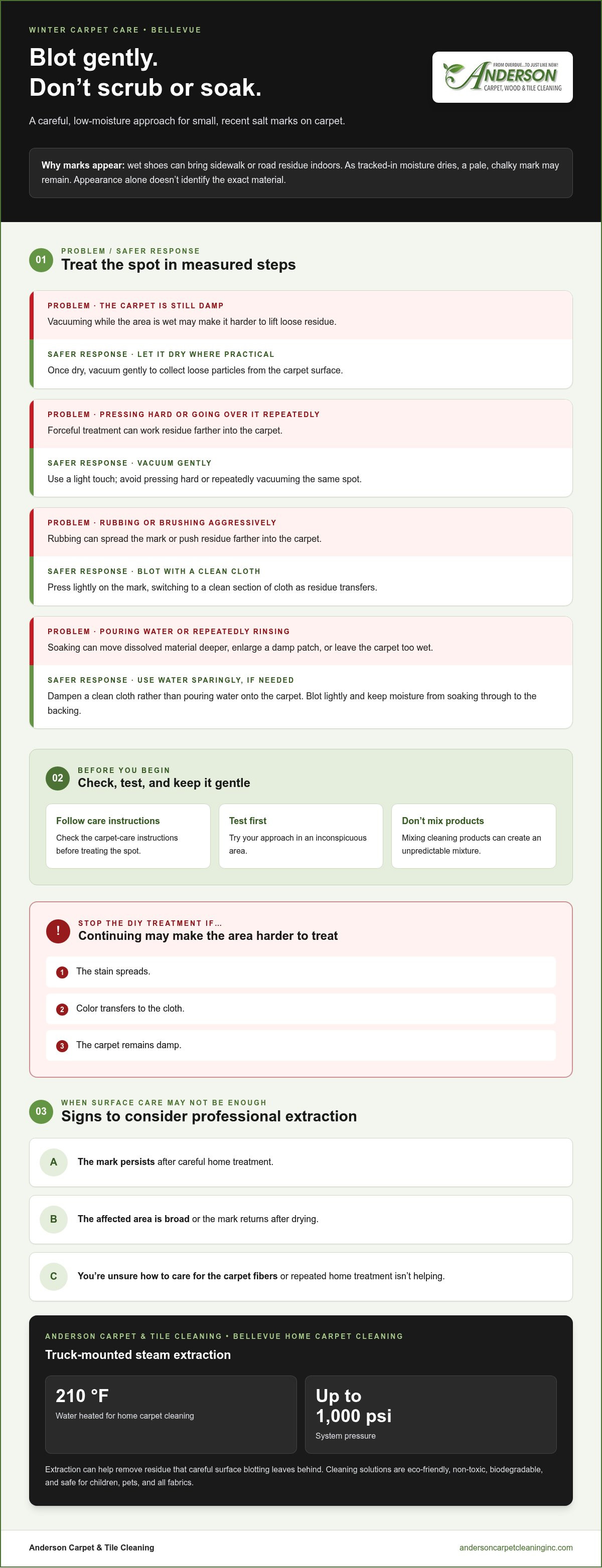
For a small, recent mark, use as little moisture as possible and work gently. If you’re deciding how to remove salt stains from carpet in winter Bellevue, start with the carpet’s care instructions and stop if the spot reacts unexpectedly.
- Let it dry where practical. If the area is damp, allow it to dry before vacuuming so loose residue is easier to lift.
- Vacuum gently. Use a vacuum to collect dry particles from the surface. Avoid pressing hard or repeatedly going over the spot.
- Blot with a clean cloth. Press lightly on the mark, using a clean section of cloth as residue transfers. Don’t rub or brush aggressively.
- Use water sparingly, if needed. Dampen a clean cloth rather than pouring water on the carpet, then blot. Keep moisture from soaking through to the backing.
Stop if the stain spreads, color transfers to the cloth, or the carpet remains damp. Continuing may make the area harder to treat.
Which DIY steps help without over-wetting carpet?
Test your approach in an inconspicuous area first, and follow the carpet-care instructions. Avoid repeated rinsing, which can leave the area too wet; forceful brushing, which can spread residue; and mixing cleaning products, which can create an unpredictable mixture. A light blot is easier to control than repeated, heavy treatment.
Surface blotting is different from professional extraction, which removes moisture and residue from carpet more thoroughly. Anderson Carpet & Tile Cleaning’s guide to professional carpet extraction explains the distinction. For stubborn Bellevue carpet marks, Its home service uses truck-mounted extraction with water heated to 210 °F. Solutions are eco-friendly, non-toxic, biodegradable, and safe for children, pets, and all fabrics. Explore Bellevue residential carpet cleaning with a free, no-obligation estimate and travel within the service area included at no extra cost.
When Bellevue carpet needs professional salt-residue cleaning
Consider professional cleaning if a mark persists after careful home treatment, covers a broad area, returns after drying, or leaves you unsure how to care for the carpet fibers. Repeated rinsing can add moisture without resolving residue. If you’re still trying to remove salt stains from carpet in winter Bellevue, extraction may help lift what surface blotting leaves behind.
Anderson Carpet & Tile Cleaning provides Bellevue home carpet cleaning with truck-mounted steam extraction, water heated to 210 °F, and system pressure up to 1,000 psi. Its cleaning solutions are eco-friendly, non-toxic, biodegradable, and safe for children, pets, and all fabrics. Proprietary cleaning agents prevent re-soiling.
What should Bellevue homeowners expect from a carpet-cleaning visit?
Anderson is woman-owned, locally operated, and not a franchise. Owner Lisa Shultz provides direct communication and free, no-obligation estimates. Pricing is transparent, and travel within the service area is included at no extra cost.
- Arrival windows vary by 30 minutes, for example, from 8:00 AM to 8:30 AM. Technicians will attempt to contact you and wait up to 20 minutes before leaving.
- Technicians keep shoes on during service for OSHA compliance and use protective coverings. They may move only lightweight items under 15 lb, leaving heavy or fragile furniture in place.
- A $60 late-cancellation fee applies to cancellations within two hours of arrival. A $99 non-refundable fee applies if the property is inaccessible at the scheduled time.
- After cleaning, stay off cleaned floors for about six (6) hours and keep pets off for twenty-four (24) hours. If you are not completely satisfied, a technician will return to re-clean any areas of concern at no charge, provided you make the request within three (3) days of the appointment.
For persistent Bellevue carpet residue, request a free Bellevue carpet-cleaning estimate.
Make your entryway easier to care for this winter
A small entryway routine can make the next wet-weather cleanup simpler. Keep a mat where shoes come off, and give damp boots a place to dry before they cross the carpet. If a pale mark returns or DIY care leaves you unsure, don’t feel you have to keep treating it yourself. Knowing when to pause is part of protecting your carpet.
If you’re ready for help to remove salt stains from carpet in winter Bellevue, Anderson Carpet & Tile Cleaning offers residential carpet cleaning with truck-mounted extraction using water heated to 210 °F. If you’re not completely satisfied, a technician will return to re-clean any areas of concern at no charge, provided you request it within three (3) days of the appointment.
Take the next step at your pace: request a free, no-obligation carpet-cleaning estimate. A fresh start for your carpet can begin with one simple request.
Frequently Asked Questions
Can I use vinegar to remove salt stains from carpet?
Vinegar isn’t a guaranteed salt-stain remedy, and its suitability depends on your carpet. Check the manufacturer’s care instructions, then test your approach on a hidden patch and let it dry to check for a change. If appropriate, dab with a clean cloth rather than scrubbing. Delicate fibers or marks that remain are better assessed by a carpet-cleaning professional.
How do I remove dried white salt marks from carpet?
For a dried white mark, vacuum first to lift loose crystals and grit without adding moisture. Then press a clean, slightly damp cloth against the remaining spot, switching to a clean section as residue transfers. Avoid pouring water or scrubbing. If carpet color transfers, the mark spreads, or residue remains after it dries, stop rather than repeating the treatment.
Can road salt damage my carpet?
Visible white residue alone doesn’t prove carpet fibers have been damaged. Tracked-in moisture and debris can, however, make a spot harder to manage if left in the pile or repeatedly worked with wet cleaning. Gentle, timely attention is sensible. If residue covers a wide area or returns after drying, professional extraction can help address what surface care hasn’t lifted.
When should I call a carpet cleaner for winter salt stains in Bellevue?
Call if careful cleaning hasn’t cleared the mark, it returns, covers a broad area, or you’re unsure about fiber care. For help to remove salt stains from carpet in winter Bellevue, Anderson Carpet & Tile Cleaning, a woman-owned, locally operated business and not a franchise, offers free, no-obligation estimates. Its eco-friendly, non-toxic, biodegradable solutions are safe for children, pets, and all fabrics.


