

You just watched a full glass of red wine or a bowl of soup disappear into your plush living room rug, and that sudden pit in your stomach says the carpet is ruined. It is a high-stress moment every Seattle homeowner faces, and you need to know exactly what to do after a big spill on carpet before the liquid sets. We understand that anxiety because we have seen how a single accident can make a beautiful room feel tarnished. However, acting too quickly with the wrong retail cleaner can actually lock a stain in forever.
This guide provides a clear emergency plan to contain the mess and protect your flooring's health. You will learn proper blotting techniques to prevent "wicking" and how to use safe, non-toxic mixtures that won't leave sticky residues behind. We will also help you decide when a DIY effort is enough and when your home needs the power of professional truck-mounted steam extraction to reach the moisture trapped deep in the padding.
Key Takeaways
- Learn exactly what to do after a big spill on carpet by acting within the critical ten-minute window to contain liquid before it reaches the padding.
- Master the outside-in blotting technique to effectively stabilize the mess and prevent the liquid from spreading across a larger area of your flooring.
- Discover why mild, eco-friendly solutions are safer for your family and more effective than harsh retail cleaners that often leave behind sticky, dirt-attracting residues.
- Identify the signs that a spill has reached the sub-surface, requiring professional high-temperature extraction to ensure a healthy, moisture-free home environment.
Immediate Emergency Steps for Large Carpet Spills
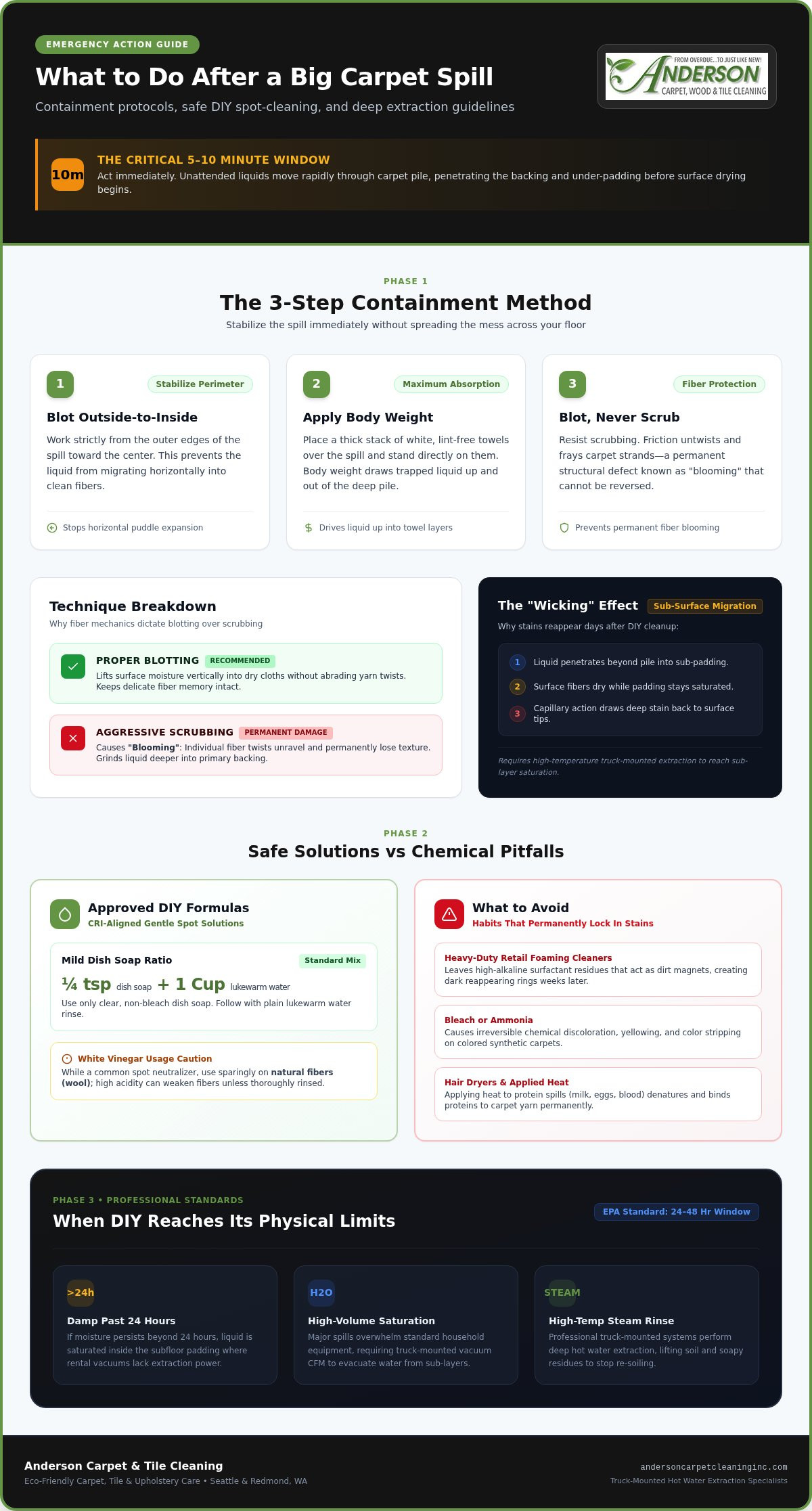
When a drink topples or a pet has a major accident, your first instinct is likely panic. Knowing what to do after a big spill on carpet in those first five to ten minutes determines whether you'll be looking at a permanent reminder or a successfully restored floor. Liquid moves quickly through the fibers, often reaching the backing and padding before you've even found a towel. Acting fast is the most effective way to prevent deep saturation and long-term damage to your home environment.
To better understand this concept, watch this helpful video:
Use the "Containment Method" by working from the outer edges of the spill toward the center. This technique prevents the liquid from spreading horizontally and creating a larger mess. For high-volume spills, pressure is much more effective than simple hand-blotting. Place a thick stack of white, lint-free towels over the area and stand on them. Your body weight forces the liquid out of the carpet pile and into the absorbent cloth, which helps protect the underlying materials. For those who require this level of meticulous care for luxury assets like private planes, you can check out Virginia Aircraft Detailers for specialized 24/7 on-call aviation detailing.
The "Blot, Don’t Scrub" Rule Explained
Scrubbing is the enemy of your carpet's longevity. It causes "blooming," where the individual fiber twists fray and permanently lose their original texture. Instead, rely on established carpet cleaning and hot water extraction methods to lift soil safely without damaging the material. Wicking is the process where deep stains rise to the surface as the carpet dries. If the spill has saturated the padding, our team at Anderson Carpet & Tile Cleaning in Seattle can provide the deep extraction needed to ensure your home remains healthy and clean.
Safe DIY Cleaning Solutions and Common Mistakes
Once you have blotted the excess liquid, your next decision determines if a shadow remains on your floor. For most homeowners wondering what to do after a big spill on carpet, the safest start is often the simplest. We recommend using plain lukewarm water or a very mild mixture of 1/4 teaspoon clear, non-bleach dish soap to 1 cup of water. This follows the Carpet and Rug Institute's stain removal guidelines, which emphasize gentle rinsing to prevent damaging delicate fibers.
Avoid the temptation to grab heavy-duty foaming cleaners from the grocery store. These products often contain high-alkaline surfactants that leave behind a sticky residue. This film acts like a magnet for dirt, causing a dark reappearing stain weeks later. Our family-owned team prioritizes health-conscious methods, much like our approach to eco-friendly upholstery cleaning in Redmond. While white vinegar is a popular DIY neutralizer for many spots, use it sparingly on natural fibers; its acidity can weaken or damage wool if it isn't thoroughly rinsed away.
What to Avoid: Chemicals That Set Stains
Knowing what to do after a big spill on carpet also means understanding which household staples to avoid. Never use bleach or ammonia on colored synthetic carpets, as these can cause permanent yellowing or color loss. Similarly, keep the hair dryer in the bathroom. Applying heat to protein-based spills like milk, eggs, or blood effectively binds the proteins to the fiber, making the stain nearly impossible to remove. If your DIY efforts aren't lifting the spot, it's time to seek professional help. Our specialists at Anderson Carpet Cleaning in Seattle use advanced extraction technology to safely lift deep-set residues without the risk of fiber damage.
When to Call a Seattle Professional for Deep Extraction
Knowing what to do after a big spill on carpet includes recognizing when a DIY solution has reached its physical limits. If your carpet remains damp 24 hours after an accident, the liquid has likely migrated into the underlying padding. Standard home vacuums and rental units often lack the suction power to reach this sub-surface saturation. At Anderson Carpet Cleaning in Seattle, we utilize truck-mounted steam extraction to perform a high-temperature rinse that lifts moisture from the deepest layers of your flooring. This process is vital for preventing "wicking," where stains reappear as the fibers dry. For homeowners in other regions like Alberta, you can visit Cleaning Guru Carpet and Home Cleaning to access professional extraction services that ensure a thorough, healthy result.
According to EPA moisture control and water cleanup guidelines, it's essential to dry damp materials within 24 to 48 hours to prevent microbial germination. Without professional-grade air movers, organic growth can develop in the dark, moist environment beneath your carpet. This leads to persistent odors and indoor allergens that simple surface cleaning cannot fix. For more detailed insights on our process, see our Professional Carpet Cleaning in Seattle: The Ultimate Guide. You should seek professional help if:
- The spill area exceeds ten square feet.
- The carpet remains noticeably damp after a full day.
- A lingering sour or musty odor begins to develop.
The Risk of Mold in the Pacific Northwest
Our local climate presents a unique challenge for indoor drying. Seattle's ambient humidity often slows down natural evaporation, making what to do after a big spill on carpet a matter of home health as much as aesthetics. For Bellevue homes with high-end wool rugs or specialized fibers, our family-operated care ensures that moisture is extracted safely. We prioritize non-toxic solutions to protect your family while restoring your home's peace of mind.
Restore Your Peace of Mind and Your Flooring
A major spill doesn't have to mean the end of your favorite carpet. By acting within the first few minutes and using gentle solutions, you can prevent most liquids from becoming permanent stains. Remember that knowing what to do after a big spill on carpet is about more than just appearance; it's about protecting your home environment from trapped moisture. As a woman-owned, family-operated business with 25+ years of experience, we specialize in truck-mounted steam extraction that reaches deep into the padding where DIY methods fail. We use eco-friendly, non-toxic solutions safe for children and pets, ensuring a thorough clean without residues. Save your carpets today; get a professional cleaning quote from Anderson Carpet & Tile Cleaning! You can trust our seasoned team to treat your home with the care it deserves.
Frequently Asked Questions
Can I use a steam mop on a carpet spill?
No, you should not use a steam mop on a carpet spill. The concentrated heat from these devices can permanently "cook" or set a stain into the fibers, making it impossible to remove later. Steam mops are designed for hard floors and lack the suction required for what to do after a big spill on carpet. Stick to blotting with cold or lukewarm water instead.
How do I get the smell out of my carpet after a big spill?
Successful odor removal depends on extracting the liquid from the carpet padding. We use specialized enzyme treatments that break down organic matter rather than just masking the scent. Our Seattle team employs high-temperature truck-mounted extraction to reach the sub-surface layers where bacteria often grow. This professional approach ensures your home environment remains healthy and free of lingering smells after a significant accident.
Is it okay to use baking soda on a wet carpet spill?
We do not recommend putting baking soda on a wet spill. Baking soda often clumps into a gritty paste when it gets wet, which can be extremely difficult to remove from the carpet pile. These fine particles can also clog or damage your home vacuum's filters and motor. It is much safer to rely on consistent blotting and mild, non-toxic soap solutions to stabilize the area.
How long does it take for a carpet to dry after a professional cleaning in Seattle?
Most carpets in the Greater Seattle area dry within four to eight hours after a professional service. Because our regional humidity can slow the process, we use high-performance extraction technology to remove the maximum amount of moisture. For our clients in Bellevue or Medina, we suggest increasing airflow with fans or adjusting your thermostat to help the fibers dry completely and prevent any musty odors.


