

The strongest cleaner isn’t always the best cleaner for white grout. If grout still looks dingy after mopping, it can be tempting to reach for a harsher formula. But a product that is unsuitable for the grout or surrounding tile may cause damage without removing the stain. Choose based on the surface and the type of soil you’re treating.
This guide compares cleaner types and explains how to approach common problems such as mold, mineral deposits, and everyday soil. You’ll also learn how to use a product carefully, rinse away residue, and recognize when a stain may be too deeply embedded for DIY cleaning. If soil persists, professional high-pressure steam cleaning offers another option for hard surfaces. Optional grout sealant may help reduce future staining.
Key Takeaways
- Choose the best cleaner for white grout by matching the formula to the stain and checking its label against both grout and tile materials.
- Before cleaning, remove loose soil, spot-test the product, and follow label directions with good ventilation.
- Agitate gently, rinse thoroughly, and never mix cleaning chemicals to help protect surfaces and avoid residue.
- If suitable DIY cleaning doesn’t lift embedded dirt, learn what to expect from professional tile and grout cleaning and optional grout sealant.
Best Cleaner for White Grout: Match the Formula to the Surface
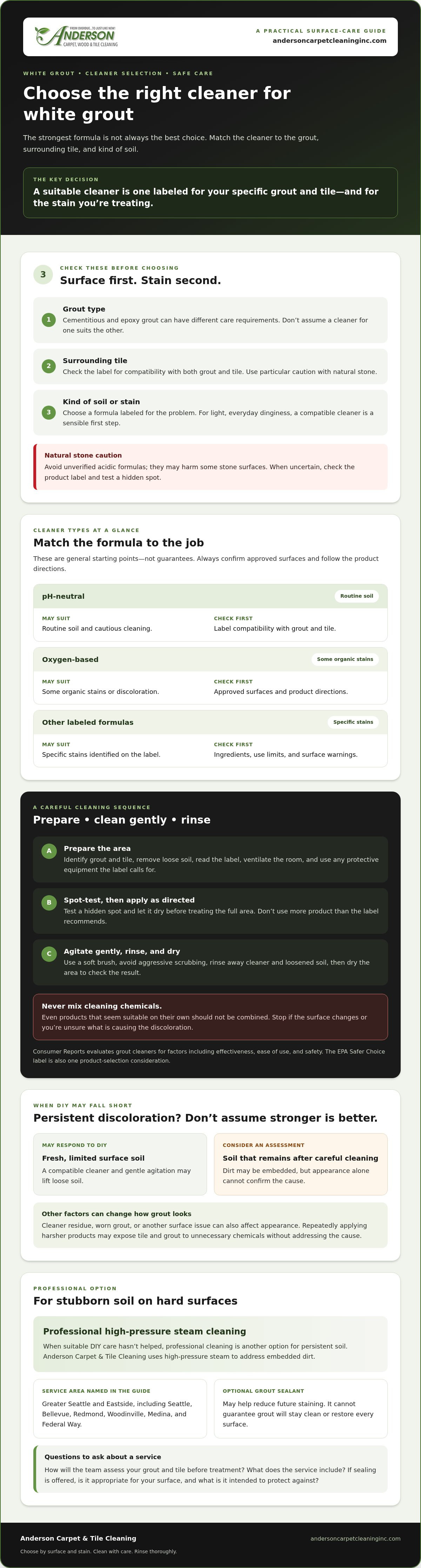
Choose a grout cleaner by checking three things: the grout type, the surrounding tile, and the stain. A strong formula can be unsuitable for a particular surface. For light, everyday dinginess, a compatible cleaner is a sensible first step.
Grout materials differ in composition and care needs. The Grout overview explains the distinction between common grout types, but the product label and your tile material are just as important when choosing a cleaner.
For a quick look at grout-cleaning technique, watch this video:
| Cleaner type | May suit | Check first |
|---|---|---|
| pH-neutral | Routine soil and cautious cleaning | Label compatibility with grout and tile |
| Oxygen-based | Some organic stains or discoloration | Approved surfaces and directions |
| Other labeled formulas | Specific stains identified on the label | Ingredients, use limits, and surface warnings |
Which cleaner suits cement grout, epoxy grout, and natural stone?
Cementitious and epoxy grout can have different care requirements, so don’t assume a cleaner that works for one is suitable for the other. Natural stone needs particular caution. Avoid unverified acidic formulas, which may harm some stone surfaces. Check the label for compatibility with both the grout and tile, then test a hidden spot and let it dry before treating the full area.
A suitable grout cleaner is one labeled for your specific grout and tile, and for the kind of stain you’re treating. Matching the product to the surface is a safer way to choose the best cleaner for white grout than relying on strength alone.
How to Clean White Grout Safely, and When DIY Falls Short
A careful process helps protect tile while giving a compatible cleaner time to work. First, identify the grout and tile, clear away loose soil, and read the product label. Ventilate the room, use any protective equipment the label calls for, and test the cleaner in a hidden spot before applying it more widely.
- Apply the compatible cleaner as directed, without using more than the label recommends.
- Gently agitate the grout with a soft brush; avoid aggressive scrubbing that could damage the surface.
- Rinse away cleaner and loosened soil, then dry the area to check the result.
Never mix cleaning chemicals, even if each product seems suitable on its own. Consumer Reports evaluated grout cleaners for factors including effectiveness, ease of use, and safety. Its coverage also highlights the EPA Safer Choice label as one product-selection consideration.
How can you tell whether the stain needs more than a household cleaner?
Loose surface soil may lift with a compatible cleaner and gentle agitation. If discoloration remains after careful cleaning, the soil may be embedded, but appearance alone can’t confirm the cause. Cleaner residue, worn grout, or another surface issue can also change how the area looks.
Stronger chemicals aren’t automatically a better choice; the wrong formula can harm grout or tile without addressing the cause of the discoloration. Stop if the surface changes or you’re unsure what you’re seeing. For persistent or widespread discoloration, consider professional assessment instead of repeatedly applying harsher products. Seattle-area homeowners can explore Seattle tile and grout cleaning as one option for stubborn soil.
When Professional White-Grout Cleaning Makes More Sense
DIY cleaning can work well for fresh, limited soil because you can choose a suitable product and treat a small area at a time. If discoloration remains, repeating applications may not reach embedded dirt and may expose the tile and grout to unnecessary chemicals. Professional high-pressure steam cleaning is another option for hard surfaces when soil persists.
Anderson Carpet & Tile Cleaning provides tile and grout cleaning in the Greater Seattle and Eastside areas, including Seattle, Bellevue, Redmond, Woodinville, Medina, and Federal Way. This woman-owned, family-operated business uses high-pressure steam to address embedded dirt. Optional grout sealant may help reduce future staining, but it can’t guarantee grout will stay clean or restore every surface.
What should you ask before booking a grout-cleaning service?
Ask how the team will assess your grout and tile materials before treatment, and what the service includes. If sealing is offered, ask whether it is appropriate for your surface and what it is intended to protect against.
Persistent grout soil merits an assessment when suitable DIY care hasn’t helped. If you’re in Seattle, explore Seattle tile and grout cleaning to learn about a local service option. For nearby areas such as Bellevue, Redmond, Woodinville, Medina, and Federal Way, check current service availability before arranging a visit.
Choose a Safer Path to Brighter Grout
The best cleaner for white grout is the one suited to the grout, tile, and stain, not simply the strongest formula. Follow the label, test a discreet spot, and stop if careful cleaning doesn’t shift persistent discoloration. For embedded soil, professional cleaning may be a sensible next step.
Anderson Carpet & Tile Cleaning serves the Greater Seattle and Eastside region as a woman-owned, family-operated local business. Its tile and grout cleaning uses high-pressure steam, and optional grout sealant may help protect against future staining. Results depend on the surface and soil.
For help with stubborn grout, request tile and grout cleaning from Anderson Carpet & Tile Cleaning. A surface-appropriate approach can help you care for your floors and work toward a cleaner, brighter home.
Frequently Asked Questions
What is the best cleaner for white grout?
The best cleaner for white grout is one labeled as compatible with your grout, tile, and stain. A pH-neutral product may suit routine cleaning, while other formulas target specific soils. Check the directions and surface warnings, then test a hidden spot before cleaning the full area. A stronger formula isn’t automatically safer or more effective.
Can you use bleach to clean white grout?
Bleach may be suitable for some white-grout cleaning tasks, but check the product label and confirm compatibility with the grout and nearby tile first. Ventilate the area, follow the application and rinsing directions, and test an inconspicuous spot. Never mix bleach with other cleaning products. If you’re uncertain about the surface or stain, choose a compatible alternative or seek professional advice.
How do you clean white grout without damaging tile?
Identify the grout and tile materials, sweep or vacuum loose soil, then apply a compatible cleaner according to its label. Gently agitate the grout with a soft brush, rinse away the product, and dry the area to check the result. Ventilate the room and spot-test first. Avoid aggressive scrubbing, excess cleaner, and mixing chemicals, especially around natural stone or delicate finishes.
When should you hire a professional to clean white grout?
Consider professional cleaning if discoloration remains after suitable DIY care, covers a broad area, or you’re unsure how to treat the surface safely. Anderson Carpet & Tile Cleaning serves the Greater Seattle and Eastside region, including Seattle, Bellevue, Redmond, Woodinville, Medina, and Federal Way. The woman-owned, family-operated business uses high-pressure steam, with optional grout sealant.


