

Protecting your carpet from pets takes more than one miracle product. A few steady habits can help manage tracked-in dirt, shed hair, everyday wear, and accidents. Learning how to protect carpets from pets means combining prevention with prompt, careful cleanup when messes happen.
This guide covers ways to reduce routine dirt and hair, what to do after an accident, and what to check on cleaning-product labels before using them around pets. It also explains when professional care may be worth considering for persistent stains or odors. Anderson Carpet & Tile Cleaning serves families in Greater Seattle and the Eastside, including Seattle, Bellevue, Redmond, Woodinville, Medina, and Federal Way. Its services include residential carpet cleaning and pet odor and stain treatment. A practical routine can make carpet care more manageable, even when pets are part of the household.
Key Takeaways
- Learn how to protect carpets from pets with habits that help limit tracked-in dirt, shedding, and everyday wear.
- Adjust vacuuming to your household traffic, your pet’s shedding, and your carpet’s care instructions.
- Watch for recurring spots, persistent odors, or embedded soil that may need more than routine home care.
- Consider professional carpet cleaning or pet odor and stain treatment when home care isn’t enough.
How pets affect carpet: what protection can realistically do
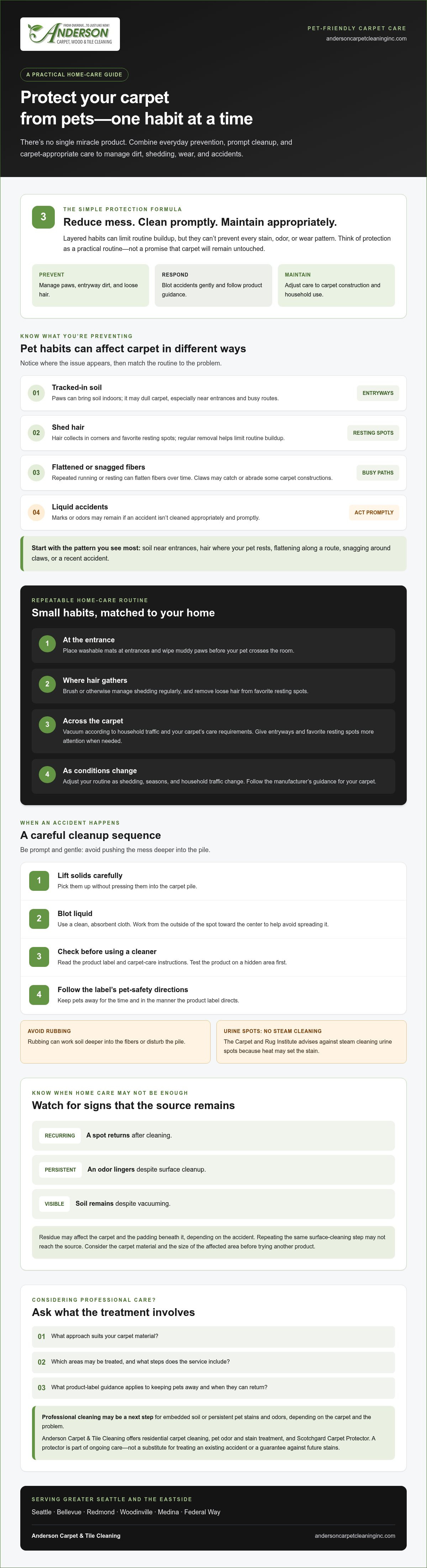
Paws can track in soil that dulls carpet, while shed hair collects in corners and along busy routes. Repeated running or resting in the same places can flatten fibers over time. Claws may catch or abrade some carpet constructions, and liquid accidents can leave marks or odors if they aren’t cleaned appropriately. Knowing which issues you’re dealing with makes it easier to choose the right way to protect carpets from pets.
Carpet fiber and construction affect how dirt, hair, and wear appear, so match your care routine to the material and your pet’s habits. For an overview of carpet materials and construction, consider the fiber and surface structure. Then note where your pet most often enters, plays, or rests.
Which pet-related carpet problems should you prevent first?
Start with the problems you see most often. Soil near entrances calls for attention to paws and entryways; loose hair in your pet’s favorite resting spot calls for regular hair removal. If a path looks flattened, consider how often your pet runs along it. Check for snagging around claws, especially where the carpet construction may catch them, and clean liquid accidents promptly.
Layered protection works best: reduce everyday mess, clean accidents promptly, and maintain the carpet appropriately. Washable mats and regular hair removal can limit routine buildup, but they can’t prevent every stain, odor, or wear pattern. Even a well-maintained carpet may change in high-traffic areas, and some accidents need more than surface cleanup. Treat protection as a practical routine, not a promise that carpet will remain untouched.
How to protect carpets from pets with a simple home-care routine
Choose a few habits you can repeat. Put washable mats at entrances, wipe muddy paws before your pet crosses the room, and brush or otherwise manage shedding regularly. Vacuum according to the amount of traffic and your carpet’s care requirements. Entryways and favorite resting spots may need more attention than little-used rooms. Follow the manufacturer’s guidance, and see the Carpet and Rug Institute tips for additional care advice.
After an accident, act promptly and gently. Pick up solids without pressing them into the pile, then blot liquid with a clean, absorbent cloth. Work from the outside of the spot toward the center to help avoid spreading it. Don’t rub, as this can work soil deeper into the fibers or disturb the pile.
What should you do after a pet accident?
Before using a cleaner, check both its label and the carpet’s care instructions. Test the product on a hidden area first, and keep pets away for the time and in the manner the label directs. For urine spots, the Carpet and Rug Institute advises against steam cleaning, since heat may set the stain. If an odor lingers or a spot returns, surface cleanup may not have addressed the source, so a different treatment approach may be needed.
Consistency matters more than following a rigid schedule. Adjust your routine as shedding, seasons, and household traffic change. If home care isn’t resolving a stubborn pet stain or odor, professional pet odor and stain treatment may be worth considering as part of your carpet-care plan.
When routine pet-proofing is not enough: carpet care and next steps
A spot that returns after cleaning, a lingering odor, or visible soil that remains despite vacuuming may need more than routine home care. Depending on the accident, residue may affect the carpet and the padding beneath it. Prevention helps limit new messes; treatment addresses residue or odor that’s already there. Before trying another product, consider the carpet material and the size of the affected area. Repeating the same surface-cleaning step may not reach the source.
For suggestions on removing set-in pet stains, review WebMD’s guidance and compare it with your carpet’s care instructions. Professional cleaning may be a next step for embedded soil or persistent pet stains and odors, depending on the carpet and the problem. Anderson Carpet & Tile Cleaning offers residential carpet cleaning, pet odor and stain treatment, and Scotchgard Carpet Protector. A protector is part of ongoing care, not a substitute for treating an existing accident or a guarantee against future stains.
How to decide whether to call a carpet-cleaning professional
Before booking, ask what approach suits your carpet material, which areas may be treated, and what steps the service includes. Also ask what product-label guidance applies to keeping pets away and when they can return. Anderson’s published guidance on pet odor removal offers additional information about addressing lingering smells.
If you’re in Greater Seattle or the Eastside, including Seattle, Bellevue, Redmond, Woodinville, Medina, or Federal Way, you can explore Anderson’s Seattle-area carpet cleaning to discuss whether professional care fits your situation.
Keep Your Carpet Care Routine Moving
Knowing how to protect carpets from pets comes down to steady prevention, prompt cleanup, and care that suits your carpet. Washable entrance mats, regular hair removal, and vacuuming based on household traffic can help manage everyday mess. For accidents, gentle blotting and following carpet and cleaner instructions are better choices than rubbing or guessing. If odors persist or spots return, professional treatment may be worth considering.
Anderson Carpet & Tile Cleaning is a woman-owned, family-operated local business serving Greater Seattle and the Eastside. Its offerings include residential carpet cleaning using truck-mounted steam extraction, as well as pet odor and stain treatment. These services can complement your home-care routine, without promising that every mark or odor will disappear.
Explore professional carpet cleaning for pet-owning homes and take the next step toward a cleaner, more comfortable space for you and your pets.
Frequently Asked Questions
Can I use carpet protector if I have pets?
Carpet protector may be suitable for a pet-owning home, but check that the specific treatment fits your carpet and follow its label directions. Ask the provider which treatment will be applied, how long the carpet needs to dry, and when pets can return. Keep animals off treated areas as directed. Protector may help resist some spills, but it won’t prevent every stain or make carpet pet-proof.
How often should I vacuum carpet in a home with pets?
Vacuum as often as your household’s shedding, foot traffic, and carpet require. A pet that sheds heavily or tracks in dirt may leave visible hair and soil sooner than a low-shedding pet. Pay extra attention to entry paths and favorite resting spots. There’s no single schedule for every home, so adjust based on what you see and your carpet’s care instructions.
What should I do if my pet urinates on the carpet?
Remove any solids, then blot fresh liquid with a clean, absorbent cloth instead of rubbing it into the fibers. Follow the carpet’s care instructions and the cleaner’s label, and don’t mix cleaning products. If the odor persists or the spot returns, the residue may need a different treatment approach, especially if it has reached the padding. Knowing how to protect carpets from pets also means recognizing when home cleanup isn’t enough.
Are professional carpet cleaning solutions safe for pets?
Safety depends on the product and process, so ask the cleaner which solutions will be used and follow product-specific drying and pet re-entry instructions. Anderson Carpet & Tile Cleaning describes its eco-friendly cleaning solutions as safe for children and pets, but that shouldn’t be assumed of every treatment. For homes in Greater Seattle and the Eastside, including Seattle, Bellevue, Redmond, Woodinville, Medina, and Federal Way, confirm the guidance for your service.


