In the Pacific Northwest, your carpet isn't just a floor covering; it's a high-performance filter fighting a constant battle against the mud and moisture tracked in during our long rainy seasons. You likely already know that damp shoes and heavy foot traffic lead to those stubborn, lingering odors that can settle into a professional space. It's a common frustration for local managers to see a major investment wear out prematurely because of the unique environmental challenges we face here in the Puget Sound area.
This 2026 guide will show you how to design a strategic commercial carpet cleaning schedule that protects your facility and supports a healthier indoor environment. We'll provide a clear framework to help you extend the lifespan of your materials while staying compliant with the latest King County environmental standards. By prioritizing sustainable, deep-cleaning practices, you can ensure your office or retail space remains a welcoming, high-quality environment for every employee and client who walks through your doors.
Key Takeaways
- Identify how daily foot traffic and carpet pile depth impact your maintenance needs so you can stop grit from destroying your flooring from the inside out.
- Develop a customized commercial carpet cleaning schedule that balances annual deep extractions with targeted touch-ups for high-traffic zones.
- Protect your team's health by addressing the moisture and allergens common in the Seattle climate through specialized extraction and moisture management.
- Learn how a professional walkthrough helps you map out a cost-effective plan that extends the life of your carpet and preserves your capital investment.
- Discover the best ways to coordinate your daily janitorial vacuuming with professional deep cleaning to maintain a consistently fresh brand image.
Factors Influencing Your Commercial Carpet Cleaning Schedule
Your commercial carpet cleaning schedule isn't a "one size fits all" plan. It's a dynamic strategy based on how your building actually functions and the specific demands of the Seattle environment. Daily foot traffic is the primary driver of fiber wear and soil accumulation. High-volume areas like lobbies, reception desks, and breakrooms face constant abrasion. This grit acts like sandpaper, cutting into the carpet fibers every time an employee or client walks across them.
Aesthetics also play a significant role in your planning. Darker carpets or high-pile styles are excellent at hiding dirt, but this can be a trap for facility managers. While the surface looks clean, deep-seated grit can destroy the carpet backing long before a visible stain appears. Understanding common carpet cleaning methods helps you choose a frequency that prioritizes structural integrity and healthy indoor air quality, rather than just waiting for the floor to look "dirty."
To better understand how professional maintenance protects these materials, watch this helpful video:
The Impact of the Pacific Northwest Climate
In cities like Seattle and Bellevue, rainfall is a constant companion for much of the year. This high rainfall requires more frequent maintenance of entrance mats to prevent moisture from reaching your main flooring. In the Pacific Northwest, we define the regional "soil load" as a heavy combination of organic matter, decomposed foliage, and persistent moisture that clings to footwear. During the damp winter months, commercial carpets that aren't professionally maintained can trap this moisture, creating a risk for mold and mildew growth that impacts everyone in the building.
One way to minimize this issue is by managing the cleanliness of your building's perimeter; professional exterior cleaning from Poseidon Power Washing LLC helps clear away the mud and organic buildup on walkways before it has a chance to be tracked inside.
Analyzing Traffic Zones in Your Facility
Effective maintenance starts with mapping your floor plan into specific zones. The most critical are "track-off" zones, which consist of the first 15 feet of any entrance where the majority of outdoor soil is deposited. Beyond the doors, you must identify "funnel zones" like elevators, stairwell landings, and narrow hallways. These areas require double the attention of corner offices because every person in the facility passes through them daily. For those managing properties across the lake, our localized guide to commercial carpet cleaning in Bellevue provides specific insights for Eastside traffic patterns.
Recommended Cleaning Frequencies by Industry and Zone
A generic commercial carpet cleaning schedule often fails because it doesn't account for the radical differences in how local businesses operate. A quiet law firm in a downtown high-rise has vastly different needs than a bustling boutique near Pike Place Market. For standard professional offices, we usually recommend a deep extraction every 6 to 12 months, supplemented by quarterly touch-ups in high-traffic corridors. This cadence prevents the "graying" effect where soil becomes permanently bonded to the carpet fibers.
Other industries require more rigorous attention to maintain safety and brand standards:
- Retail and Showrooms: These spaces often require monthly or bi-monthly cleaning to ensure the environment reflects the quality of the products sold.
- Medical and Healthcare: Monthly deep cleaning is essential here to meet strict hygiene and sanitization standards, protecting both patients and staff.
- Restaurants and Hospitality: Due to food spills and tracked-in grease, these facilities often need monthly or even weekly cycles to prevent permanent staining and stubborn odors.
When looking at specialized environments, such as cleaning frequencies for schools, it's clear that high-occupancy buildings demand a more proactive approach to maintain air quality and surface health. We apply these same rigorous standards to every commercial project we undertake.
Zone-Based Scheduling for Maximum ROI
Smart facility management involves breaking your building down into specific zones to maximize your maintenance budget. Your lobbies and reception areas are the face of your company, so they benefit most from monthly hot water extraction. In contrast, conference rooms and individual cubicles usually only require annual or bi-annual deep cleaning for fiber preservation. We help local managers develop these tailored plans through our commercial carpet cleaning in Seattle, ensuring you don't overspend on low-traffic areas while keeping your main entrances pristine.
The High-Traffic Restoration Method
For businesses in tech hubs like Redmond, preventing permanent fiber crushing is a top priority for long-term carpet health. We often recommend "interim cleaning," which uses specialized techniques to lift the pile and remove surface soils before they can migrate deeper into the backing. Applying a Scotchgard Carpet Protector is also a vital step in this process. It creates an invisible barrier that repels spills and makes daily vacuuming much more effective. If you want to see how a customized plan can restore your facility, consider scheduling a professional walkthrough to assess your specific traffic patterns.

Implementing Your Maintenance Plan with a Local Partner
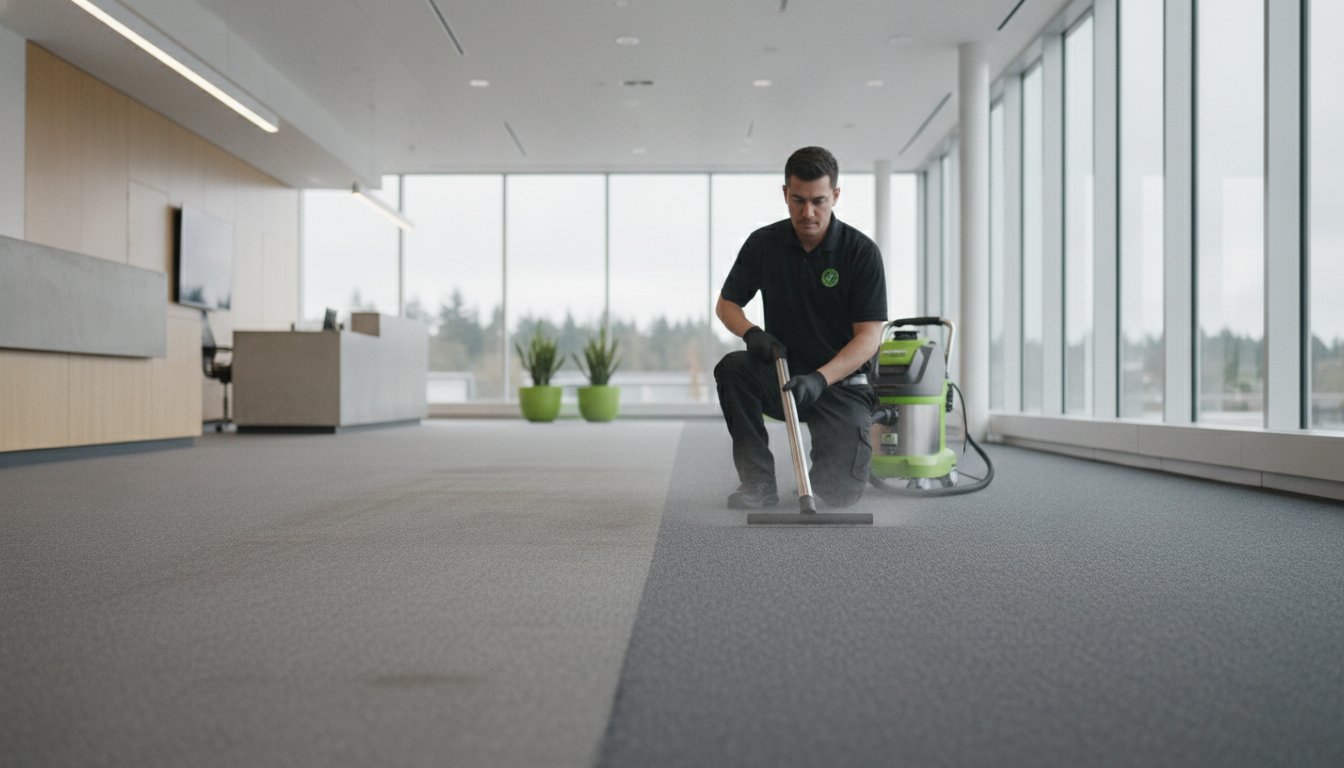
A successful commercial carpet cleaning schedule begins with a personalized, professional walkthrough of your facility. We don't just glance at the floors; we map out specific traffic zones and analyze soil levels in every corner of your building. This collaborative approach allows us to coordinate seamlessly with your existing janitorial staff. While your daily crew handles essential vacuuming, we provide the deep, professional extraction needed to remove the abrasive grit that standard equipment leaves behind.
Following the Carpet and Rug Institute (CRI) 204 Standard ensures your maintenance plan meets the highest industry benchmarks for fiber preservation. For most Seattle business facilities, we utilize truck-mounted steam extraction. This high-performance method provides the necessary heat and suction to pull moisture and pollutants from deep within the carpet backing. To keep your operations running smoothly, we offer flexible after-hours and weekend scheduling to eliminate any potential business disruption.
The Anderson Advantage for Seattle Businesses
With over 25 years of local experience serving communities from Medina to Federal Way and Woodinville, we understand the specific environmental challenges of the Puget Sound. We prioritize employee safety by using eco-friendly, non-toxic solutions that protect your indoor air quality. For facility managers looking for specialized Eastside support, our commercial carpet cleaning in Redmond provides tailored plans for high-tech and corporate environments alike.
Creating a "Set It and Forget It" Contract
Moving to a pre-scheduled recurring contract offers excellent budget predictability for your business. Instead of reacting to visible stains or emergency odors, you can plan your maintenance costs as a fixed, manageable expense. This proactive care significantly reduces long-term capital expenditure by extending the life of your flooring and delaying the high cost of replacement. When you are ready to protect your facility investment, get a custom commercial carpet cleaning quote to see how we can support your healthy workspace.
Secure the Long-Term Health of Your Seattle Facility
Implementing a consistent commercial carpet cleaning schedule is one of the most effective ways to protect your building's assets and the well-being of your team. By understanding your specific traffic zones and addressing the unique moisture challenges of the Pacific Northwest, you transition from reactive repairs to proactive care. This strategic approach doesn't just keep your carpets looking fresh; it preserves the structural integrity of the fibers and ensures your indoor air quality remains high throughout the year.
As a woman-owned local Seattle business that's been family-operated for over 25 years, we take pride in helping our neighbors maintain professional, healthy workspaces. We use advanced truck-mounted deep steam extraction technology to deliver a level of cleanliness that standard janitorial equipment simply can't match. Our team is ready to help you design a maintenance framework that fits your budget and operational needs.
Request a Commercial Maintenance Walkthrough for Your Seattle Facility to start protecting your investment today. We look forward to helping you create a cleaner, more inviting environment for your clients and staff.
Frequently Asked Questions
How often should office carpets be cleaned in the Seattle area?
Most Seattle offices require a professional deep cleaning every 6 to 12 months to maintain a professional appearance and healthy air quality. However, high-traffic zones like lobbies or transition areas often need quarterly maintenance due to the heavy moisture and organic debris tracked in during our rainy seasons. Tailoring your commercial carpet cleaning schedule to your specific foot traffic ensures your flooring remains a durable asset for your business.
What is the best time of year to schedule commercial carpet cleaning?
Late winter and early spring are the most critical times for Seattle businesses to schedule deep cleaning. This is when the "soil load" from persistent rain and mud is at its peak, creating a risk for mold or fiber degradation if left unaddressed. Regular maintenance during these damp months prevents moisture from settling deep into the carpet backing, which protects your indoor environment when employees spend the most time indoors.
Does professional cleaning disrupt our daily business operations?
Professional cleaning doesn't have to interrupt your workflow or client meetings. We specialize in after-hours and weekend service windows to ensure your staff isn't inconvenienced by equipment or drying times. By coordinating your maintenance when the building is vacant, you return to a fresh, restored workspace the following morning without any loss in productivity or operational downtime for your team.
How long does commercial carpet take to dry after steam cleaning?
Most commercial carpets are dry and ready for foot traffic within 6 to 12 hours after a deep steam extraction. We use high-performance truck-mounted systems that extract the vast majority of moisture during the process. When combined with your building's HVAC system or the use of professional air movers, this ensures your facility is completely dry and safe to inhabit by the very next business day.
Is professional steam extraction better than dry chemical cleaning for offices?
Hot water extraction is the superior method for commercial environments because it reaches the deep-seated grit that dry methods often miss. While dry chemical cleaning offers faster initial drying, it can leave behind chemical residues and fails to remove the allergens trapped deep in the carpet backing. Our steam extraction process flushes out pollutants and restores fiber resilience, creating a truly healthy environment for your employees.
Can regular cleaning really extend the life of my commercial carpet?
Yes, a consistent commercial carpet cleaning schedule can extend the lifespan of your flooring by several years by removing abrasive particles before they shear the fibers. When grit settles deep into the carpet, it acts like hidden sandpaper, cutting into the material with every step. Regular professional extraction removes this debris, which helps you avoid the massive capital expense of a premature carpet replacement.


