What if the very cleaning method meant to refresh your home actually caused your expensive wool carpet to shrink or develop permanent "browning" stains? It's a valid concern for many Seattle homeowners who understand that wool isn't just another floor covering; it's a natural, luxurious investment that requires a unique touch. When you're looking for professional wool carpet cleaning, you aren't just looking for a stain remover. You're looking for a specialist who understands the delicate chemistry of natural fibers and the specific challenges of our humid Pacific Northwest climate.
We agree that your family's health and the longevity of your home's interior are top priorities. That's why we've put together this guide to help you learn the specialized science of wool fiber care and why professional steam extraction is the safest way to protect your investment. You'll discover how the right balance of pH-neutral solutions and high-velocity extraction removes deep-seated dirt while preserving the fiber's natural lanolin. We will also look at how specialized drying techniques ensure your carpets stay soft and residue-free, even when the Seattle weather isn't cooperating. This approach guarantees a deep clean that protects your children, your pets, and the long-term value of your home.
Key Takeaways
- Understand why wool’s unique protein structure requires a delicate pH balance to prevent permanent fiber damage or browning.
- Discover why professional wool carpet cleaning is necessary to remove the hidden grit trapped deep within the fiber’s microscopic scales.
- Learn how specialized truck-mounted steam extraction sanitizes your home while removing 95% of moisture instantly for fast drying.
- Master the art of moisture management in Seattle’s humid climate to prevent mold growth and preserve your carpet's luxurious texture.
- Establish a 12-18 month maintenance routine to stop abrasive soil from acting like sandpaper on your high-value investment.
Understanding Wool Fibers: Why Your Carpet Needs Specialized Care
Wool isn't just a fabric; it's a living, breathing natural resource. Composed of a resilient protein called keratin, wool fibers are designed by nature to protect sheep from harsh elements. In your home, this translates to a carpet that's incredibly durable and soft. However, this protein structure makes wool carpet cleaning a delicate science. Because it's an organic material, it reacts poorly to harsh environments and improper chemicals. Protecting the natural lanolin coating is essential, as this wax-like substance provides the fiber with its signature luster and built-in soil resistance.
To better understand how these natural fibers behave during a professional service, watch this helpful video:
One of the most fascinating aspects of wool is its microscopic structure. Each fiber is covered in tiny, overlapping scales called cuticles. These scales are excellent at hiding dry soil deep within the pile, which is why your carpet might look clean even when it's holding pounds of dust. While regular vacuuming is essential, it can't reach the grit locked under these scales. Over time, that hidden dirt acts like sandpaper, wearing down the fibers from the inside out.
The pH Factor: Why Grocery Store Cleaners Ruin Wool
Most off-the-shelf cleaners are formulated for synthetic fibers like nylon, which can handle high-alkaline chemicals. Wool is different. High-alkaline solutions cause the keratin to become brittle, leading to permanent fiber damage or causing dyes to "bleed" and migrate. To protect your investment, we only use WoolSafe-approved, pH-neutral solutions that maintain the fiber's integrity and keep the colors vibrant.
Wool vs. Synthetic: The Maintenance Gap
While synthetic fibers like polyester are hydrophobic and resist water, wool is naturally hydroscopic, meaning it can absorb up to 30% of its weight in moisture without feeling damp to the touch. This unique trait allows wool to act as a natural filter, improving indoor air quality by trapping allergens and regulating humidity. However, it also means that standard carpet cleaning methods must be carefully adjusted. If too much water is used without powerful extraction, the carpet can stay wet for days. This is why residents in Seattle, WA trust specialized care that balances deep cleaning with rapid moisture removal.
The Professional Steam Extraction Method: Is It Safe for Wool?
Many homeowners hesitate when they hear the word "steam" because they fear shrinkage. It's a common misconception. When performed by a specialist, wool carpet cleaning using truck-mounted extraction is actually the most effective way to sanitize your home. Our system uses high-temperature vapor to break down oily residues without ever saturating the delicate backing of the carpet. The secret lies in our "low-moisture, high-heat" approach. While the steam kills bacteria and allergens, our powerful vacuum system removes 95% of the water instantly.
With 25 years of experience serving neighborhoods from Bellevue to Medina, we know exactly how to calibrate our equipment. We adjust the pressure specifically for delicate wool weaves to ensure the fibers are cleaned but never stressed. This level of precision is why our process is safe for every member of your family, including crawling babies and pets. By focusing on fiber safety and health-essential maintenance, we provide a level of care that protects both your family and your investment.
The Anderson Wool Cleaning Process
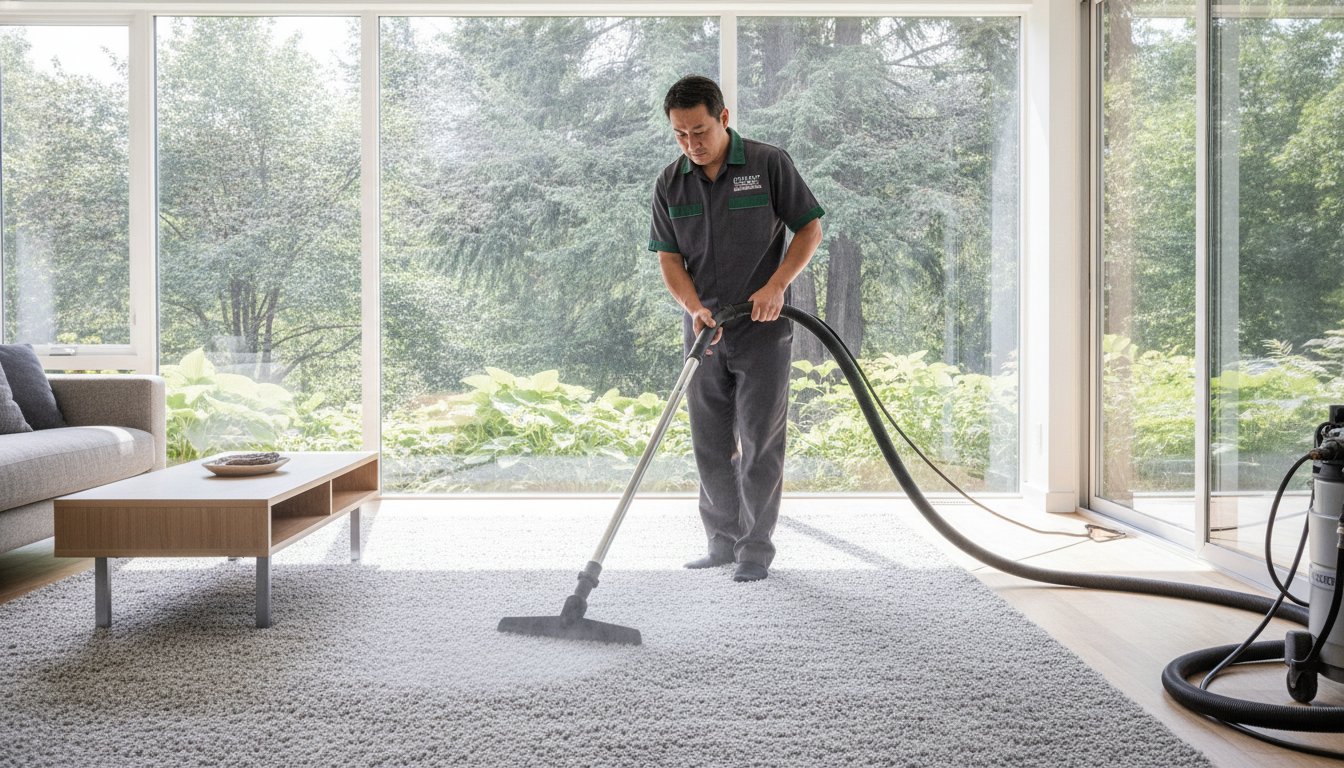
- Step 1: Industrial-Strength Dry Soil Removal. We begin with thorough vacuuming to remove the abrasive grit that hides deep within the pile.
- Step 2: Gentle Pre-conditioning. We apply WoolSafe-approved, non-toxic agents to loosen oils and stains safely without damaging the fiber's pH balance.
- Step 3: High-Temperature Rinse. A controlled steam rinse is followed by immediate high-velocity extraction to leave fibers clean, soft, and residue-free.
Debunking the 'No Heat' Myth
The idea that heat ruins wool is only half true. Damage and shrinkage usually happen because of aggressive agitation or prolonged soaking in water. Professional wool carpet cleaning relies on this balance of heat and immediate extraction to prevent the fibers from staying wet too long. Professional truck-mounted systems provide much more consistent results than portable rental units because they offer better temperature control and superior suction.
As noted by the Carpet and Rug Institute, following manufacturer-recommended methods is vital for maintaining your warranty. If you're curious about the technical side of our machinery, check out our Professional Carpet Cleaning in Seattle: The Ultimate Guide. For those ready to refresh their space, our team offers specialized residential carpet cleaning tailored to your home's unique needs.

Protecting Your Investment: Wool Care in the Pacific Northwest
Seattle’s climate is legendary, but for your home’s interior, it presents a specific hurdle. High humidity can turn a standard cleaning into a multi-day drying ordeal if not managed correctly. We don't let that happen. Our wool carpet cleaning process includes the use of high-volume air movers that accelerate evaporation. This ensures your carpets are dry within hours, not days, which effectively prevents the risk of mold or mildew growth in our damp environment.
Beyond the climate, daily life takes a toll on natural fibers. Even if your carpet looks clean to the eye, microscopic grit acts like sandpaper against the delicate properties of wool. This "fiber abrasion" eventually dulls the luster of your investment and weakens the pile. Scheduling professional care every 12 to 18 months is the best way to remove this grit and extend the life of your flooring. For our clients in Redmond, WA, we often suggest applying Scotchgard Carpet Protector. This helps the wool’s natural scales repel liquid spills, giving you more time to blot up accidents before they set.
Spill Management for Natural Fibers
Accidents happen in every busy household. When they do, remember the 'White Towel' rule. Always use a clean, dye-free cloth to blot up the liquid. Never rub the spot. Rubbing can fray the fibers or push the stain deeper into the pile. For most minor emergencies, plain water or a splash of white vinegar works best. However, if you're dealing with pet accidents, standard soap won't cut it. You need specialized enzyme treatments to break down the proteins. If you're struggling with lingering smells, read our guide on Pet Odor Removal in Arlington, WA for more professional solutions.
Local Service for Local Homes
We aren't a faceless franchise. As a woman-owned, family-operated business, we take pride in our deep community roots. Whether we're visiting a historic home in Bellevue or a modern high-rise in Seattle, we bring a neighborly touch to every job. We treat your space with the care it deserves, ensuring your family enjoys a healthy, clean environment that lasts. Our seasoned veterans understand the local landscape, making us the trusted choice for families who value reliability and stability.
Preserve the Beauty and Health of Your Wool Carpets
Your wool carpet is more than just a floor covering; it's a centerpiece of your home's comfort and style. By understanding the unique protein structure of these fibers and the importance of pH-neutral care, you can prevent the damage often caused by generic cleaning methods. Specialized wool carpet cleaning is the only way to remove abrasive grit while protecting the natural lanolin that keeps your carpet soft and resilient. With the right moisture management, your floors will remain a healthy, vibrant part of your living space for decades.
Since 1995, our family-owned and operated team has helped Seattle neighbors protect their homes with precision and care. We use truck-mounted high-temperature extraction technology to sanitize deeply without over-wetting the carpet backing. Our eco-friendly, non-toxic solutions are always safe for your kids and pets, ensuring peace of mind along with a spotless finish. Don't leave your high-value investment to chance. Schedule Your Professional Wool Cleaning in Seattle Today and experience the difference that decades of local expertise makes. We look forward to helping you restore the warmth and beauty of your home.
Frequently Asked Questions
Can wool carpets be steam cleaned safely?
Yes, wool carpets can be steam cleaned safely when handled by a specialist using a low-moisture, high-heat approach. The danger to wool isn't the heat itself but the risk of soaking the fibers and backing. Our professional truck-mounted systems use controlled vapor to sanitize the pile while powerful vacuums extract 95% of the water instantly. This precision prevents the shrinkage and browning often caused by the excessive water used in portable rental machines.
How long does it take for a wool carpet to dry after professional cleaning?
Typically, a wool carpet will take between 4 and 8 hours to dry completely after a professional service. Because wool is naturally hydroscopic and can hold significant moisture without feeling wet, we use high-volume air movers to accelerate evaporation. In our humid Seattle climate, this mechanical drying is essential to prevent mold growth and ensure your home environment stays healthy and fresh.
Will professional cleaning remove the natural lanolin from my wool rug?
No, a professional wool carpet cleaning service won't strip the lanolin if the correct pH-neutral products are applied. We use only WoolSafe-approved solutions that are specifically formulated to clean the fiber while leaving the natural oils intact. In fact, removing the abrasive grit that hides in your carpet actually protects the lanolin by stopping the physical friction that wears it away over time.
What is the best way to remove a red wine stain from wool?
Immediate action is key; start by blotting the spill with a clean, white towel to absorb as much liquid as possible. It's vital that you never scrub the area, as this can fray the natural fibers and permanently set the stain. You can gently apply a mixture of one part white vinegar to three parts water to help neutralize the pigment. If the spot remains, it's best to contact a specialist rather than using harsh store-bought chemicals that might damage the wool's delicate protein structure.


