
What if the biggest threat to your favorite sofa isn't a spilled glass of wine, but the very air inside your Seattle home? Most Pacific Northwest homeowners take pride in a clean house, yet many don't realize that furniture can trap allergens and moisture, turning a cozy living room into a health hazard. You likely worry about persistent pet dander or your upholstery fading from the sun, even on our grayest days. It is frustrating to invest in high-quality pieces only to see them lose their luster or require a $1,000 refinishing job much sooner than expected.
We believe your home should be a sanctuary, not a source of stress. This guide shares essential furniture maintenance tips to help you preserve your investments and improve your indoor air quality. By following this repeatable routine, you can extend the life of your furniture using eco-friendly, non-toxic methods that are safe for your kids and pets. We will walk you through the EPA-recommended humidity standards of 30% to 50%, explain why Seattle's 2026 disposal rules mean you still need a plan for old items, and provide a seasonal checklist to keep your home feeling showroom-new and healthy for your family.
Key Takeaways
- Learn how immediate blot treatments and weekly dusting with microfiber cloths prevent permanent stains to keep your home's surfaces showroom-new.
- Master essential furniture maintenance tips for wood and fabric, including how to decode manufacturer tags and select alcohol-free polishes that protect natural grains.
- Discover how maintaining the EPA-recommended 30% to 50% humidity level prevents wood cracking and stops hidden mold from growing in your upholstery.
- Understand the vital connection between deep cleaning and indoor air quality to protect your family from trapped pet dander and allergens.
- Navigate Seattle's 2026 disposal regulations and learn why professional restoration is a more sustainable, cost-effective alternative to replacing high-quality pieces.
The Daily & Weekly Furniture Care Checklist
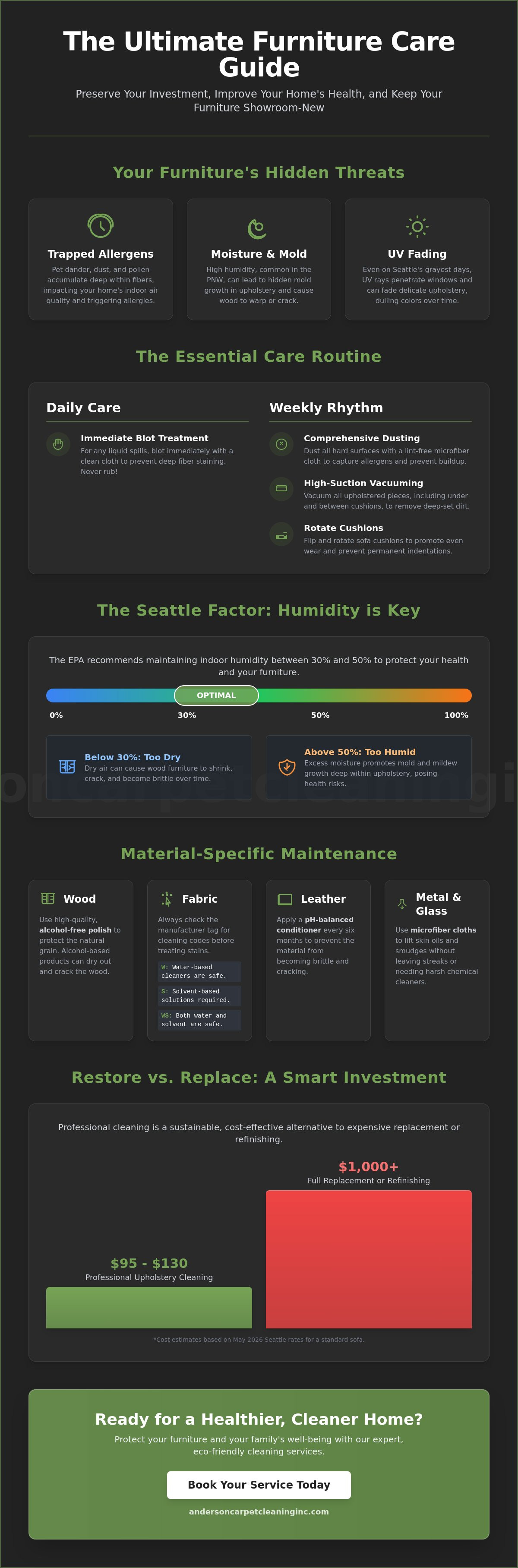
Consistent care is the foundation of a healthy home. In our experience serving Bellevue and North Seattle since 1996, we have found that a structured rhythm prevents the accumulation of allergens and deep-set grime. These furniture maintenance tips ensure your pieces remain in showroom-new condition while protecting your family's indoor air quality. By following a clear cadence, you avoid the high costs of premature replacement or extensive repairs.
- Daily: Perform an immediate blot-treatment for any liquid spills to prevent deep fiber staining.
- Weekly: Conduct a comprehensive dusting of all hard surfaces using lint-free microfiber cloths.
- Weekly: Use high-suction vacuuming on all upholstered pieces, ensuring you reach the areas under and between cushions.
- Weekly: Rotate your sofa cushions to promote even wear and prevent the formation of permanent "sinkholes."
To better understand how to handle common surface issues, watch this helpful video on restoring wood finishes:
Surface Protection & Dusting Habits
Protecting your furniture begins with smart habits. Use felt or cork-bottomed coasters to prevent moisture rings on wood surfaces; these are common in our damp PNW climate. Always avoid ammonia-based cleaners. These harsh chemicals can strip away protective finishes over time, leaving wood vulnerable to cracking. When dusting, always wipe with the grain of the wood to avoid microscopic scratches that dull the shine. Following these furniture maintenance tips and understanding the history and types of furniture in your collection allows you to tailor your cleaning approach to the specific needs of each material.
Immediate Spill Management
When an accident happens, remember the "Blot, Don't Rub" rule. Rubbing a spill forces the liquid deeper into the fibers and can permanently damage the fabric's texture. Use cold water for unknown organic spills; hot water can often set a stain, making it impossible to remove later. If a spot persists after your initial attempt, it's time to stop DIY efforts. Attempting to use harsh household chemicals can lead to discoloration. For deep-set issues or delicate fabrics, professional upholstery cleaning is the safest way to revive your furniture. In Seattle, professional rates as of May 2026 typically range from $95 to $130 for sofas, which is a small price to pay to protect a high-value piece and ensure a spotless result.
Material-Specific Maintenance: Wood, Fabric, and Leather
Every material in your home requires a specialized touch to stay showroom-new. Since 1996, we have seen how the wrong cleaner can cause permanent damage to high-value investments. These material-specific furniture maintenance tips help you manage the unique needs of your collection, from heirloom oak tables to modern modular sectionals.
- Wood: Apply high-quality, alcohol-free polish to revive the shine and protect the natural grain. Alcohol-based products can dry out the wood, leading to the cracking issues common when indoor humidity drops below the EPA-recommended 30% level.
- Fabric: Always check the furniture tag for cleaning codes. "W" means water-based cleaners are safe, "S" requires solvent-based solutions, and "WS" allows for both.
- Leather: Use pH-balanced conditioners every six months. This prevents the leather from becoming brittle and cracking in dry indoor air.
- Metal & Glass: Use microfiber cloths to lift skin oils and smudges. This technique removes residue without leaving streaks or needing harsh chemicals.
Preserving Fabric & Upholstery Integrity
UV rays are a hidden threat in Seattle. Even on overcast days, ultraviolet light penetrates windows and can fade delicate upholstery fibers over time. Beyond sun damage, pet oils naturally accumulate in fabric. These oils act as a magnet for dust and dander, eventually creating a dull, grimy appearance. For homes with crawling babies or pets, we always recommend non-toxic, eco-friendly treatments. These safe methods protect your family's health while effectively breaking down organic buildup. If your sofa feels less than fresh, a professional deep clean can revive the fibers and improve your home's air quality.
Hard Surface Longevity
Stability is just as important as aesthetics. We recommend checking hardware and joints at least twice a year. Tightening loose screws on dining chairs and bed frames prevents structural damage and ensures long-term safety. Additionally, always use trivets for hot dishes. Heat-blushing is a common finish defect that occurs when high temperatures cause moisture to be trapped under the surface coating, creating permanent white marks. Taking these small steps protects the integrity of your furniture for decades.
The Seattle Factor: Humidity and Professional Deep Cleaning
Living in the Pacific Northwest means managing more than just rain; it means managing the invisible moisture that settles into your home's fabrics. High PNW moisture levels often lead to hidden mold growth deep within furniture padding, which can compromise both the piece and your health. Your furniture essentially acts as a giant air filter, capturing dust, pollen, and pet dander from the air. Without proper furniture maintenance tips and deep cleaning, these particles remain trapped, eventually recirculating back into your living space and lowering your indoor air quality.
Protecting Furniture from PNW Humidity
Consistency is key for material stability. You should maintain indoor humidity levels between 30% and 50% to prevent wood warping or swelling, according to EPA standards. It is also vital to ensure proper air circulation by pulling large pieces away from exterior walls, as stagnant air in these cold spots often leads to condensation. In King County, persistent indoor moisture significantly accelerates the degradation of upholstery fibers, often cutting the functional lifespan of a sofa by several years if left unmanaged.
When to Call Anderson Carpet & Tile Cleaning
Even the most diligent homeowners find that DIY spotting has its limits. If you notice lingering pet odors or colors that look dull despite regular vacuuming, it's time for professional furniture cleaning. We utilize truck-mounted steam extraction, which is the industry gold standard for deep soil removal. This high-heat cleaning method uses specialized equipment to reach temperatures that break down stubborn body oils and sanitize fibers without the need for harsh chemicals. Our family-operated team serves Redmond and Bothell with safe, eco-friendly solutions that protect your family. For high-traffic Eastside homes, we recommend a professional deep clean every 12 to 18 months to keep your indoor environment healthy and your furniture looking showroom-new.
Protect Your Home Sanctuary for Years to Come
Maintaining a healthy home in the Pacific Northwest requires more than just an occasional wipe-down. By implementing these furniture maintenance tips, you protect your investment from the unique dampness of our region and ensure your indoor air remains fresh for your family. Remember that maintaining the EPA-recommended 30% to 50% humidity level is just as important as rotating your cushions or blotting spills. These simple habits prevent wood from warping and stop allergens from becoming permanent residents in your upholstery.
Sometimes, even the best DIY routine needs a professional boost to reach the deep-seated oils and dander that standard vacuuming misses. Our family-owned and woman-operated team has been serving the community since 1995 with a commitment to your family's safety. We use truck-mounted high-heat steam extraction and eco-friendly, non-toxic solutions that are safe for both pets and children. Revive your furniture today with Anderson's Best in the PNW cleaning services! You deserve a home that feels as healthy as it looks, and we're here to help you achieve that peace of mind.
Frequently Asked Questions
How often should I have my furniture professionally cleaned in Seattle?
You should schedule professional upholstery cleaning every 12 to 18 months to maintain a healthy home environment. In our damp Seattle climate, moisture and organic matter can settle into fibers faster than in drier regions. If you have pets or children, an annual visit ensures that deep-seated dander and oils are removed before they cause permanent damage. Regular professional care is one of the most effective furniture maintenance tips for extending the life of your sofa.
Homeowners in other humid areas, such as the South Carolina Lowcountry, can find similar professional expertise at Pure Breeze Clean, where the focus is on maintaining a healthy, allergen-free indoor environment through expert cleaning.
Is it safe to use vinegar and water on my wood furniture?
Avoid using vinegar and water on your wood furniture because the acetic acid can eventually eat through protective topcoats. While it's a popular DIY suggestion, consistent use leads to a dull finish and leaves the wood vulnerable to moisture damage. Instead, use a pH-neutral, alcohol-free cleaner specifically formulated for wood. Protecting the finish is vital since a full professional refinishing in Seattle can cost between $721 and $1,000 as of April 2026.
What is the best way to remove pet hair from a microfiber sofa?
The best way to remove stubborn pet hair from microfiber is by using a simple rubber squeegee or a damp rubber glove. These tools create the friction necessary to pull hair out of the tight weave, which a standard vacuum often misses. Once the hair is gathered into clumps, it's easy to lift away. Following these daily furniture maintenance tips prevents oils from building up and bonding the hair to the fabric over time.
Can professional upholstery cleaning help with my seasonal allergies?
Professional upholstery cleaning is an essential tool for managing seasonal allergies because it removes deep-seated pollen, dust mites, and dander. Our truck-mounted steam extraction reaches high temperatures that sanitize fibers and lift allergens that household vacuums cannot reach. By treating your furniture as a giant air filter and cleaning it regularly, you can significantly improve your home's indoor air quality and reduce respiratory irritation throughout the year.


