

That innocent-looking spray bottle of water might be the biggest threat to your living area's centerpiece. While you likely searched for how to clean a microfiber couch to fix a small spill, many homeowners quickly discover that water alone often leaves behind a permanent, crunchy ring. It is frustrating to watch a beautiful sofa lose its soft, velvet-like texture to the damp Seattle climate and well-intentioned DIY mistakes.
We want to help you reclaim your home's comfort and health. This guide provides a professional roadmap to removing stubborn pet odors and deep-set grime without damaging your fabric's delicate fibers. You will learn how to achieve a deep, non-toxic clean that is safe for your children and pets while restoring that original showroom feel.
We will walk you through decoding your upholstery tags, selecting the right solvents, and using extraction techniques that prevent moisture from trapping allergens. From our home base in Seattle to the surrounding Eastside communities, we have spent over 25 years perfecting these methods to ensure your furniture stays stain-free and remains incredibly soft.
Key Takeaways
- Locate and decode your upholstery care tag to ensure you use the correct cleaning solvent for your specific fabric type and avoid permanent damage.
- Master the rubbing alcohol and dry foam techniques for how to clean microfiber couch surfaces without leaving behind a stiff or crunchy texture.
- Understand why professional-grade extraction is the most effective way to remove deep-seated allergens and oils trapped within your sofa’s foam.
- Protect your family with eco-friendly cleaning strategies that are specifically designed for the unique needs of Seattle’s damp, humid environment.
Identifying Your Microfiber: The Critical Role of Cleaning Codes
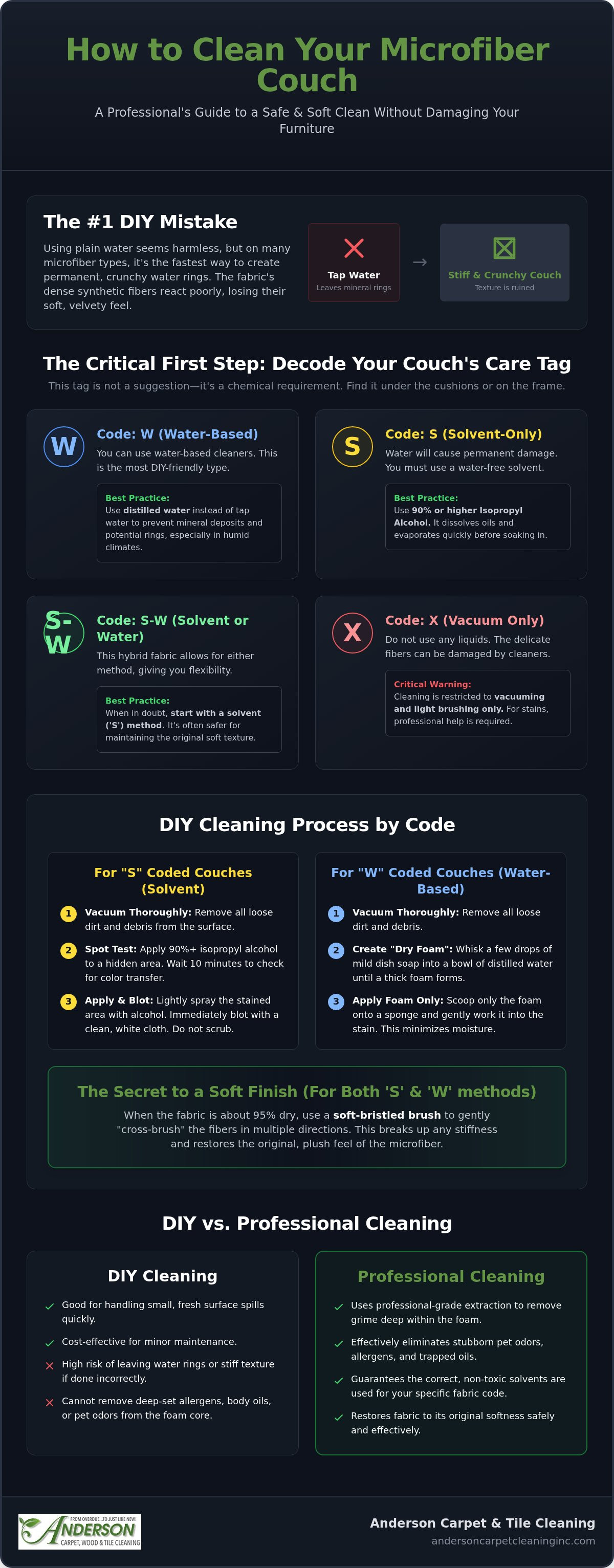
Before you grab a sponge or a bottle of cleaner, you must find your sofa’s "birth certificate." Understanding What is Microfiber Fabric is the first step toward a safe and successful clean. This synthetic material is incredibly dense, which makes it durable but also highly sensitive to the wrong liquids. Look for the care tag tucked under the seat cushions or stapled to the bottom of the wooden frame. This small piece of fabric dictates exactly how to clean microfiber couch surfaces without causing permanent damage to the material.
The letters on that tag aren't suggestions; they are chemical requirements that protect your investment. A "W" means you can use water-based cleaners or mild dish soap. An "S" indicates that water will leave permanent rings, so you must use only water-free solvents. "S-W" is a hybrid that allows for either method, though solvents are often safer for maintaining the texture. If you see an "X," proceed with extreme caution. These fibers are exceptionally delicate and require professional vacuuming only to avoid melting or matting the fine pile.
Living in the Pacific Northwest presents a unique challenge for "S" coded furniture. Seattle tap water contains minerals that can bind to synthetic fibers during the slow drying process common in our humid climate. If you use tap water on an "S" fabric, you'll likely end up with a dark, stiff ring that is nearly impossible to remove. This is why matching the cleaning agent to the code is the most important part of the process.
The Science of Solvent vs. Water
If your tag says "S," you need a solvent that evaporates almost instantly. We recommend using 90% or higher isopropyl alcohol. This high concentration ensures the liquid dissolves oils from skin and pets then vanishes before it can saturate the internal foam core. For "W" fabrics, always choose distilled water over tap. Using distilled water prevents the unsightly mineral rings often seen in Bellevue homes where the local water supply can interact poorly with cleaning agents.
Testing in an Inconspicuous Area
Never treat a visible stain first. Apply your chosen cleaner to a hidden spot on the back or bottom of the couch and wait ten minutes. Use a clean white cloth to blot the area and check for any dye transfer. Colorfastness is more important than stain removal during the initial test. If the fabric feels slightly stiff after it dries, you can gently brush it with a soft-bristled toothbrush to restore the original nap without damaging the fibers.
Step-by-Step DIY Microfiber Cleaning Methods
Learning how to clean microfiber couch cushions at home can save money, but it requires a careful touch. Once you've identified your cleaning code, you can safely begin the restoration process. For those wondering about the specifics, Step-by-Step DIY Microfiber Cleaning involves using specific tools for specific codes. If your couch is labeled "S," the rubbing alcohol method is your best friend. Lightly spray a small area with 90% isopropyl alcohol and immediately blot with a clean, white cloth. Use a gentle circular motion to lift the dirt without pushing it deeper into the padding. Avoid scrubbing hard; this can damage the delicate synthetic pile.
For "W" coded sofas, the "dry foam" technique is essential. Mix a few drops of mild dish soap into a bowl of distilled water and whisk it until a thick foam forms. Scoop only the foam onto a sponge to treat the fabric. This minimizes moisture penetration, which is vital when managing drying times in the Redmond climate. Our local humidity can trap moisture in the sofa's core, leading to musty odors if the fabric stays damp for too long. If you find the stains are too deep for a home remedy, our professional upholstery cleaning can safely extract the grime for you.
The secret to a soft finish happens when the fabric is 95% dry. You must "cross-brush" the fibers using a soft-bristled upholstery brush. Moving the brush in multiple directions breaks up the bonds that make cleaned microfiber feel crunchy or stiff. This step is often skipped, but it's the difference between a couch that looks clean and one that actually feels comfortable.
Removing Common Stains: Ink, Wine, and Pet Messes
Organic stains like wine or pet messes require enzyme-based cleaners. These solutions break down the proteins without flattening the microfiber nap. For grease or body oils on headrests and armrests, use a dry micro-fiber cloth to lift the residue before applying any liquid. This prevents the oil from spreading further into the fibers.
Restoring the Texture
If your couch feels like sandpaper after drying, don't panic. Use a clean toothbrush to gently agitate the surface in small circles. This "fluffing" technique restores the suede-like feel that makes microfiber so popular. It takes patience, but it's the most effective way to bring back that original showroom texture after a deep clean.
Why Professional Upholstery Cleaning Beats DIY for Microfiber
While the DIY steps covered in the previous sections are excellent for spot treatments, there is a limit to what a spray bottle and a sponge can achieve. Professional care is often the only way to reach the deep-seated grime that accumulates over years of use. Using Anderson Carpet & Tile Cleaning's professional equipment, we can extract 95% of moisture instantly. This high-powered suction removes the dirt that DIY methods often push deeper into the foam padding. When you are looking for how to clean microfiber couch surfaces effectively, the goal should be a total extraction of contaminants, not just a surface-level wipe.
Our specialized tools go beyond the surface to remove allergens and dust mites that live deep within your sofa’s core. We use professional-grade rinses that leave your upholstery completely residue-free. This is a critical benefit because leftover soap from grocery store cleaners acts like a magnet for new dirt, causing your couch to look dingy again just weeks after cleaning. To ensure long-lasting results, we can apply Scotchgard Carpet Protector to help your fabric repel future spills and maintain its showroom appearance.
Faster Drying in the Seattle Humidity
Seattle's damp climate presents a significant challenge for drying thick upholstery. If a couch stays damp for more than 24 hours, there is a serious risk of mold and mildew growth within the cushions. Our truck-mounted high-heat extraction system facilitates rapid evaporation, even on the rainiest Pacific Northwest days. This ensures your furniture is dry, safe, and ready for your family to enjoy in a fraction of the time a DIY project would require.
Safe, Eco-Friendly Solutions
We believe a clean home should also be a healthy home. Our non-toxic, eco-friendly cleaners are far superior to harsh chemicals for Bothell families with children and pets. Every appointment begins with a professional walkthrough. This allows our experienced technicians to identify specific fabric risks and confirm that the temperature and pressure settings are perfectly calibrated for your couch's unique cleaning code.
Reclaim Your Living Space with Confidence
Mastering how to clean microfiber couch cushions starts with respecting the fabric's specific cleaning code. Whether you use the rubbing alcohol method or the dry foam technique, the goal is always to protect the delicate synthetic fibers while lifting away daily grime. It's especially important to remember that our damp Seattle climate requires fast drying times to prevent moisture from trapping allergens or mold within the foam core.
If the stains are deep or you simply want the peace of mind that comes with professional care, our family-owned team is ready to help. We've served our local community since 1995 with a commitment to home health and safety. Our specialized truck-mounted steam extraction ensures rapid drying times, while our eco-friendly, non-toxic solutions remain safe for your children and pets.
Restore your sofa’s beauty with Anderson’s professional upholstery cleaning today!
Your home is your sanctuary. We look forward to helping you keep it soft, clean, and comfortable for years to come.
Frequently Asked Questions
Can I use a steam cleaner on my microfiber couch?
You can only use a home steam cleaner if your furniture tag is marked with a "W" or "S-W" code. Using a consumer-grade steam cleaner on "S" coded fabric will likely cause permanent water damage and staining. Our professional truck-mounted extraction is different because it uses temperature-controlled heat and high-powered suction to remove moisture before it can soak into the padding. This specialized process protects the delicate synthetic fibers while ensuring a deep, healthy clean.
How do I get rid of water rings on microfiber?
You can remove water rings by lightly dampening the affected area with 90% isopropyl alcohol and blotting it with a clean white cloth. Water rings occur when minerals in tap water dry on the synthetic fibers. The alcohol dissolves these deposits without adding more moisture to the core. Once the area is dry, use a soft brush to restore the texture. This is a common challenge for those learning how to clean microfiber couch surfaces in the Pacific Northwest.
Why does my microfiber couch feel stiff after cleaning?
Stiff or "crunchy" fibers happen when the tiny synthetic hairs mat together during the drying process. This is a frequent result of DIY cleaning where the fabric isn't properly agitated as it dries. To fix this, simply take a soft-bristled upholstery brush or a clean toothbrush and gently rub the area in a circular motion. This action breaks up the bonds between the fibers and restores the original suede-like softness you love.
Is rubbing alcohol safe for all microfiber furniture?
Rubbing alcohol is the standard solvent for "S" and "S-W" coded microfiber, but it is not safe for "X" coded fabrics. "X" fabrics should only be cleaned by professional vacuuming to avoid melting or damaging the synthetic pile. Even if your care tag allows for solvents, you should always perform a spot test on a hidden area first. This ensures the alcohol won't cause the dye to bleed or change the fabric's color.
How long does it take for a microfiber couch to dry after professional cleaning?
Most microfiber couches dry within 4 to 6 hours after a professional appointment. Our truck-mounted steam extraction system is significantly more powerful than rental units, pulling 95% of the moisture out of the fabric instantly. While Seattle’s humidity can sometimes slow down DIY drying times, our high-heat process facilitates rapid evaporation. We recommend keeping a ceiling fan on or a window slightly cracked to help any remaining moisture vanish quickly.
Can I use baby wipes to spot-clean my sofa?
Baby wipes are often effective for immediate spot cleaning because they contain very little moisture and mild detergents. They work well for "W" and "S-W" fabrics if you catch a small spill before it sets. However, they are not a substitute for a deep clean. If your couch has an "S" code, even the small amount of water in a wipe could potentially leave a faint ring. Always blot the spot rather than scrubbing.


