

Could your favorite area rug be acting as a silent trap for the damp Pacific Northwest air, holding onto moisture and allergens instead of just decorating your floor? Many homeowners in North Seattle and Bellevue treat deep cleaning as an occasional luxury; however, the reality of our climate means your rug is constantly working as a giant air filter. You've likely noticed that vacuuming alone doesn't quite tackle those stubborn pet odors or the persistent worry of mildew during our long rainy seasons. Determining the right rug cleaning frequency is essential for maintaining a healthy home environment and preserving the showroom-new look of your textiles.
As a team awarded Best in the PNW, Anderson Carpet & Tile Cleaning has spent since 1996 perfecting the art of truck-mounted deep soil removal. We'll show you how to set a cleaning schedule that accounts for heavy foot traffic, muddy paws, and the unique humidity of the region. You'll learn exactly how to extend the life of your rugs and improve your indoor air quality. We'll also explain why investing in professional care, which averages around $175 to $250 for most homeowners in 2026, is a vital step for a truly healthy home.
Key Takeaways
- Learn how to adjust your rug cleaning frequency based on your household's unique foot traffic and the damp North Seattle climate.
- Recognize the "Smell Test" and other visual cues that signal deep-seated bacteria and allergens are trapped in your rug's fibers.
- Compare the effectiveness of professional truck-mounted steam extraction versus DIY maintenance for removing stubborn pet odors safely.
- Understand the role rugs play in your indoor air quality and why high-heat cleaning is essential for a healthy home environment.
- Discover how non-toxic, eco-friendly solutions can revive flattened fibers and extend the life of your textiles without harsh chemicals.
Factors That Determine Your Ideal Rug Cleaning Frequency
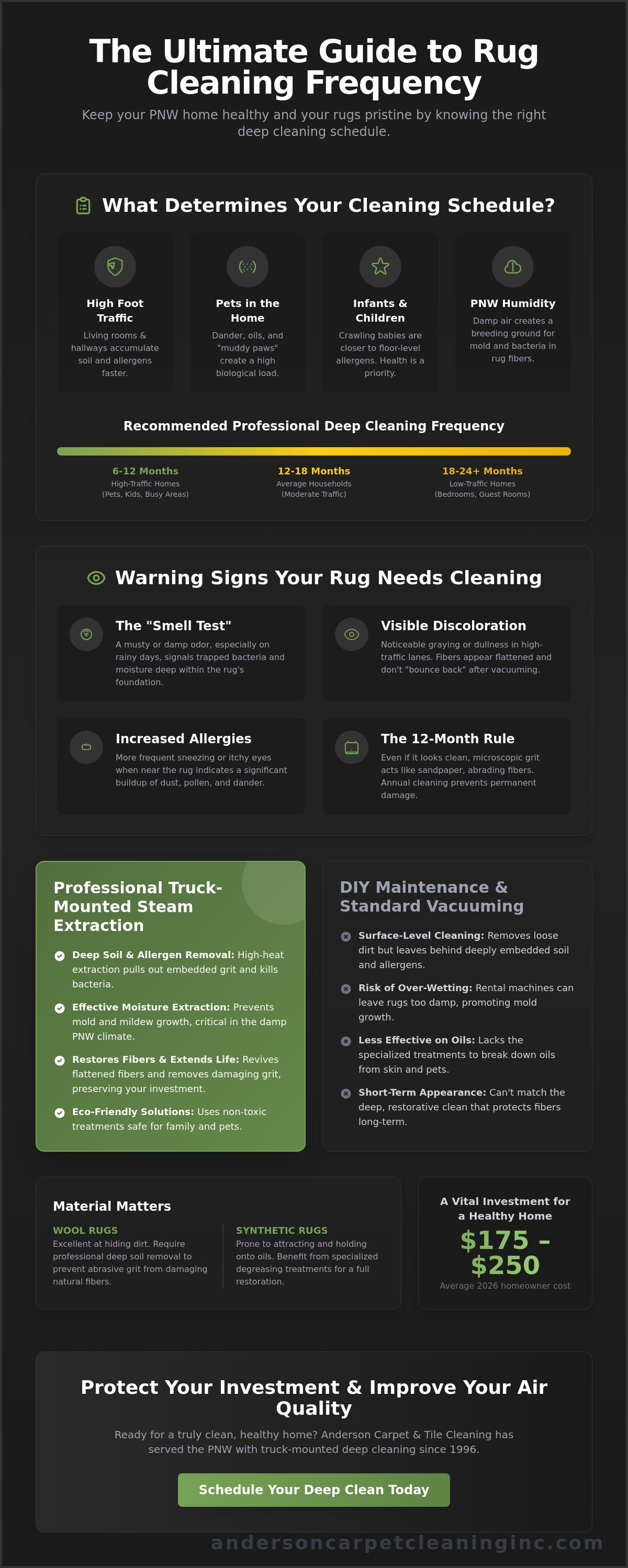
Determining your ideal rug cleaning frequency depends on the specific demands of your household. If your living room rug sees a steady stream of family members and pets every afternoon, it accumulates a high biological load of skin cells, hair, and outdoor debris. Because rugs act as giant filters for your indoor air, they eventually become saturated with dust, pollen, and dander. Once a rug is full, these particles are kicked back into the air every time someone walks across the room, which directly impacts the health of everyone in your home.
To better understand how these factors influence your maintenance schedule, watch this helpful video:
For homes with crawling infants, the stakes are higher. Babies spend their days with their faces inches from the floor. This makes a strict 6-month deep clean cycle essential for their safety and comfort. The location of the rug also dictates its needs. An entryway rug in Bothell will trap significantly more moisture and grit than a decorative piece in a guest room that rarely sees visitors.
The PNW Factor: Humidity and Your Rugs
Seattle's damp weather creates a unique challenge for local homeowners. Deep-seated moisture can linger in thick rug piles, providing a perfect breeding ground for mold and bacteria if not addressed. This is why professional moisture extraction is critical in Seattle to prevent those heavy, musty odors from taking hold. PNW humidity effectively weighs down microscopic allergens, causing them to bond to rug fibers and making standard vacuuming less effective.
Material Matters: Wool vs. Synthetic Fibers
Your rug's composition also changes how you should approach maintenance. Wool rugs are incredible at hiding dirt. Their scaled fibers can hold a surprising amount of soil before they even look dingy. You might think a wool rug is clean when it actually requires deep soil removal to prevent the grit from grinding down the fibers. On the other hand, synthetic fibers are prone to attracting oils from skin and pet paws. These rugs often require specialized degreasing treatments found in professional carpet cleaning methods to restore their original texture and shine.
Signs It Is Time to Schedule a Deep Clean
Your rug often signals for help long before a major spill occurs. One of the most telling indicators in the Pacific Northwest is the "Smell Test" during a typical rainy day. When outdoor humidity rises, it can reactivate dormant odors trapped deep within the rug's foundation. If you notice a faint, musty scent when you walk through the door, it's a clear indicator that bacteria and moisture have settled into the base. This sensory cue is one of the most reliable Factors That Determine Your Ideal Rug Cleaning Frequency.
Visual changes also provide critical clues. Look for graying lanes where your family walks most often. If the fibers appear flattened and no longer "bounce back" after vacuuming, they're likely weighed down by accumulated oils and fine soil. Increased sneezing or itchy eyes while relaxing on the floor are also red flags for allergen buildup. Even if a rug appears spotless, the 12-Month Rule applies. Microscopic grit acts like sandpaper, grinding against the delicate fibers and causing permanent abrasion that shortens the life of your investment. Regular maintenance ensures you don't have to replace expensive pieces prematurely.
High-Traffic vs. Low-Traffic Zone Schedules
Different areas of your home require different levels of care. For living rooms and busy hallways, we recommend a professional deep clean every 6 to 12 months. In contrast, rugs in bedrooms or formal dining areas can usually wait 18 to 24 months before needing service. You can find more details in our pillar guide to deep steam extraction, which offers comprehensive whole-home maintenance strategies for families in the region. Understanding your specific rug cleaning frequency needs helps maintain a healthy indoor environment for everyone.
The "Fold Test" for Hidden Dirt
You can perform a quick diagnostic check called the "Fold Test" to see what your vacuum is missing. Simply pull back the rug fibers and look deep into the backing. If you see a layer of grit or sand at the base, your rug is in danger. Embedded sand is sharp; it literally cuts rug fibers from the bottom up as you walk on them. To protect your floors, consider a professional area rug cleaning in Bothell to remove this hidden debris before it causes permanent damage. Our eco-friendly methods at Anderson Carpet & Tile Cleaning are designed to safely revive these fibers and restore your rug's original beauty.
Professional Steam Extraction vs. DIY Maintenance
Professional truck-mounted steam cleaning is the gold standard for maintaining a healthy home environment. These high-performance systems reach temperatures that effectively kill bacteria and dust mites on contact. For families in Bellevue, we prioritize safety by using non-toxic, eco-friendly solutions that are gentle on delicate fibers but tough on deep-seated soil. Our high-heat extraction process removes 95% of the moisture from your rug. This is vital in our local climate, as it ensures your rugs dry in hours rather than days, preventing the mold and mildew growth that often plagues poorly dried textiles.
Maintaining a regular rug cleaning frequency with a professional service protects your investment. By removing the abrasive grit that standard vacuums leave behind, you can extend the life of an expensive area rug by up to 50%. The Carpet and Rug Institute advises this deep maintenance every 12 to 18 months to keep your environment fresh and your warranties intact. This schedule keeps your indoor air quality high and ensures your home remains a safe place for children and pets to play.
Why Grocery Store Rentals Fall Short
Rental machines simply cannot match the suction or heat of a professional truck-mounted unit. These DIY tools frequently leave behind a sticky soap residue that acts like a magnet for new dirt. This sticky film actually forces you to increase your required rug cleaning frequency because the rug looks dingy faster than before. Inadequate suction leaves rugs soggy for 24 hours or more. In the damp PNW, this excess moisture often leads to permanent musty odors and structural damage to the rug backing.
Specialized Pet Odor Treatment
Standard surface cleaning rarely solves the problem of pet accidents. When urine reaches the rug backing, it crystallizes and becomes trapped in the foundation. Our specialized treatments penetrate these layers to neutralize odors at the source. You can read more about these deep-treatment insights in our guide to Arlington pet odor removal. We don't just mask smells; we revive your home's air quality and restore your rugs to showroom-new condition.
Protect Your Home Health and Your Investment
Maintaining the right rug cleaning frequency is more than just a chore; it's a vital commitment to your family's health and the longevity of your home's decor. You've seen how the unique Pacific Northwest climate can trap moisture and how pets or heavy foot traffic accelerate soil buildup. By recognizing early signs like the smell test or the fold test, you can stop fiber damage before it becomes permanent. Protecting these textiles ensures your living space remains beautiful and safe for years to come.
Don't settle for the surface-level results of grocery store rentals that leave behind sticky residues and excess water. Anderson Carpet & Tile Cleaning has been family-owned since 1995 and was honored as the Best in the PNW. Our truck-mounted high-heat extraction provides 99% allergen removal; this ensures your indoor air quality is at its peak. Revive your rugs today with our eco-friendly steam cleaning; schedule your service in Seattle or Bellevue! We look forward to restoring that showroom-new feel to your favorite area rugs and giving you total peace of mind.
Frequently Asked Questions
How often should I clean my rugs if I have dogs or cats?
You should schedule a professional deep clean every 6 months if you share your home with pets. Dogs and cats constantly shed dander and track in outdoor allergens that settle deep into the fibers. Regular professional maintenance prevents pet odors from becoming permanent and ensures your indoor air quality remains high for your family. This increased rug cleaning frequency is necessary to combat the high biological load pets bring into your living spaces.
Can I just vacuum my area rugs instead of deep cleaning them?
No, vacuuming alone is insufficient because it only removes about 15% of the total soil trapped in a rug. While it clears surface debris, it cannot extract the fine grit and oily pollutants that settle at the foundation. These hidden particles act like tiny blades, cutting through rug fibers with every step you take. Only high-heat steam extraction can safely remove this deep-seated soil and prevent permanent fiber damage.
Is professional rug cleaning worth the cost for synthetic rugs?
Yes, professional cleaning is a smart investment for synthetic rugs because polyester and nylon fibers are naturally oleophilic, meaning they attract oils. These oils trap dirt and create a dull, gray appearance that standard vacuuming cannot resolve. A professional deep clean removes these stubborn oils, restoring the showroom-new color and preventing the fibers from matting down permanently. This process can extend the usable life of your synthetic rug by several years.
How long does it take for a rug to dry after professional steam cleaning?
Most rugs dry completely within 4 to 8 hours thanks to our powerful truck-mounted extraction systems. We remove 95% of the moisture during the process, which is a critical advantage in our humid Washington climate. This rapid drying prevents the musty odors associated with damp textiles and allows you to enjoy your refreshed space on the same day. Adjusting your rug cleaning frequency ensures your home stays healthy and dry year-round.


