
What if the "wool" rug you’ve carefully placed in your living room is actually a clever synthetic that reacts poorly to standard cleaning solutions? It’s a stressful realization many homeowners face, especially when you’re trying to protect a high-value piece that anchors your home’s aesthetic. We understand that your rugs aren't just floor coverings; they're essential parts of a healthy, comfortable environment for your family and guests.
For readers in the Washington D.C. area, choosing a professional service like Zerorez DC Metro for Carpet Cleaning provides the same level of advanced fiber care and deep extraction technology necessary to protect high-value textiles.
By mastering rug fiber identification, you can move past the guesswork and treat your textiles with the specialized care they deserve. This guide provides the technical and sensory tools you need to distinguish between delicate natural fibers and modern high-performance synthetics. You'll learn how to perform safe home tests, understand how the 2027 Washington state PFAS regulations affect your textile choices, and ultimately determine when it's time to call in a local professional to ensure a deep, restorative clean. We’ll help you navigate the nuances of texture and material so your investment remains a beautiful, safe, and vibrant part of your home for years to come.
Key Takeaways
- Distinguish between protein-based natural fibers and petroleum-based synthetics to ensure you use the safest cleaning chemistry for your specific rug.
- Master three simple home tests for rug fiber identification, including visual inspections and the bleach test, to accurately confirm your rug's material.
- Learn how to manage the unique moisture challenges of the Pacific Northwest, where wool rugs can trap significant humidity without feeling damp to the touch.
- Prevent "cellulosic browning" and permanent damage in jute or cotton rugs by understanding the critical role of specialized drying during Bellevue’s more humid months.
- Protect your home’s health and your rug’s long-term value by matching every cleaning method to the material’s specific technical requirements.
Natural vs. Synthetic Fibers: The Rug Identification Framework
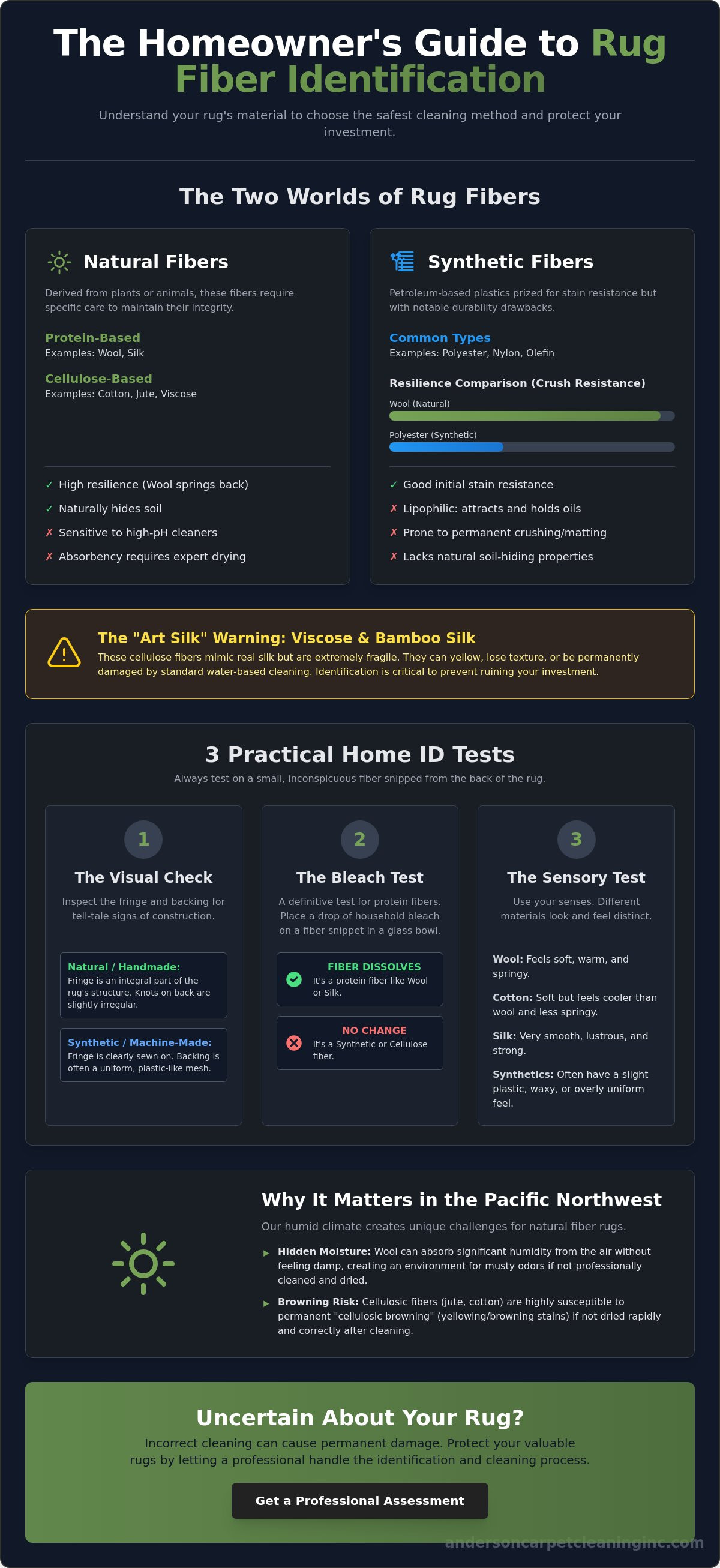
Understanding the DNA of your floor covering is the first step in preserving its beauty. Most rugs in homes across Seattle and Bellevue fall into two main categories: natural and synthetic. Natural fibers are either protein-based, like wool and silk, or cellulose-based, such as cotton and jute. In contrast, synthetic fibers are petroleum-based plastics like nylon and polyester. Professional rug fiber identification is vital because it dictates the chemistry of the clean. Using a high-pH solution on a protein fiber can cause permanent color bleeding, while synthetic materials often require specific treatments to release trapped oils.
To build a foundation for your knowledge, it's helpful to explore the history and construction of Natural vs. Synthetic Fibers. This distinction is especially important as we approach 2027, when new Washington state regulations will limit certain chemicals in textile manufacturing. Choosing natural materials often provides a "forgiveness" factor. Wool, for instance, has a microscopic scale-like structure that hides dry soil and resists staining better than many untreated plastics.
To better understand how these fibers differ in a real-world setting, watch this helpful video:
The Durability Gap: Why Material Matters
Natural fibers like wool possess a natural "memory" that allows them to spring back after being compressed by heavy furniture. Cheap polyester lacks this resilience. This often leads to permanent "crushing" in high-traffic areas of your home. While synthetics are prized for stain resistance, they are naturally lipophilic, which means they attract skin oils and pet dander. Natural fibers are more absorbent. This helps regulate indoor humidity but requires careful, professional drying to prevent musty odors or browning.
The "Art Silk" Warning
Many modern rugs sold in Redmond and Bothell feature "Bamboo Silk" or "Viscose." These are cellulose fibers designed to mimic the luxury of real silk. However, they are incredibly fragile. These look-alikes can lose their soft texture or turn yellow if cleaned with standard water-based methods. Precise rug fiber identification ensures these delicate pieces receive the specialized care they need to maintain their luster and your investment's value.
How to Identify Your Rug’s Fiber: 3 Practical Home Tests
Performing rug fiber identification at home doesn't require a laboratory. It starts with simple observations and a few common household items. Always remember the "Safety First" rule. Before trying any chemical or heat-based tests, snip a tiny, inconspicuous piece of fiber from the back of the rug. This ensures you don't damage the visible pile or the structural integrity of your favorite piece while you investigate its origins.
The first step involves a visual check. Look closely at the fringe. On authentic wool or silk rugs, the fringe is an extension of the rug's foundation. If the fringe is sewn onto the back, you’re likely looking at a synthetic, machine-made product. Turn the rug over and inspect the knots. Individual, slightly irregular knots usually indicate a handmade natural rug. A uniform, plastic-like mesh backing is a hallmark of petroleum-based synthetics. These Practical Home Tests provide a reliable baseline before you commit to a specific cleaning method.
For a more technical confirmation, the bleach test is highly effective for protein-based fibers. Place a single drop of household bleach on a small snippet of fiber in a glass bowl. If the fiber dissolves completely within minutes, it's a protein fiber like wool or silk. If it remains unchanged, it’s likely a synthetic or cellulose material. Knowing this prevents you from using the wrong chemistry on a delicate piece.
The Sensory Test: Look, Touch, and Feel
Accurate rug fiber identification often comes down to the subtle details of texture. Your hands are excellent tools for this. Real silk feels "cool to the touch" and has a soft, fluid drape. Synthetics often feel warmer and have a slight "plastic" friction when you rub the fibers between your fingers. If you're still uncertain, a professional area rug cleaning specialist can provide a definitive assessment to protect your investment.
The Burn Test Master Chart
If you're comfortable using a lighter safely outdoors, the burn test offers the most clarity. Hold a fiber snippet with tweezers and observe the reaction:
- Wool: It sizzles and curls away from the flame. It smells like burning hair and leaves a black, crushable ash.
- Nylon: This fiber melts and bubbles. It produces a distinct celery-like odor and leaves a hard, uncrushable grey bead.
- Olefin: It melts rapidly with a heavy chemical smell similar to asphalt or tar. It also leaves a hard, dark bead.
Beyond DIY: Why Identification is Critical for Seattle Rug Care
The unique climate of the Pacific Northwest adds a layer of complexity to rug fiber identification. In our region, natural fibers like wool act as a sponge. They can hold up to 30% of their weight in moisture without feeling damp to the touch. This hidden humidity can lead to mold growth or structural decay if it isn't managed correctly. During the more humid months in Bellevue, cotton and jute rugs are particularly susceptible to "cellulosic browning." This happens when the rug dries too slowly, causing unsightly brown or yellow stains to wick to the surface of the fibers.
Many homeowners attempt "DIY steam cleaning" to save costs, but this often leads to permanent damage. High heat from rental machines can shrink wool foundation yarns or even melt the delicate fibers of an olefin rug. Our professional truck-mounted extraction provides the powerful suction needed to remove deep-seated allergens while ensuring the fast dry times essential for our damp climate. This technical approach protects the material while creating a healthier indoor environment for your family.
When to Call a Professional in the Greater Seattle Area
Certain textiles require a level of expertise that goes beyond basic maintenance. Hand-knotted Orientals, silk blends, and antique family heirlooms are "Red Flag" rugs that should never be treated with generic retail cleaners. We offer a specialized area rug cleaning Bothell process designed specifically for these delicate materials. If you live in Seattle or Bellevue, a professional evaluation is the safest way to determine your rug's specific needs and avoid costly mistakes.
The Anderson Difference: Eco-Friendly Fiber Preservation
We prioritize the health of your home by using non-toxic, sustainable solutions. Each treatment is tailored to the precise pH requirements discovered during rug fiber identification. Maintaining the right rug cleaning frequency ensures that your investment remains vibrant and allergen-free. By combining high-temperature steam with industrial-grade extraction, we restore the beauty of your rugs without compromising their structural integrity or the safety of your living space.
Secure the Future of Your Home’s Textiles
Mastering the basics of material types and home testing gives you the confidence to maintain your home's comfort. You've learned how to spot the difference between resilient wool and oil-attracting synthetics. You also understand how our specific Northwest humidity requires a specialized approach to drying and extraction to prevent browning or mold. Accurate rug fiber identification is the foundation of a clean, healthy home environment that lasts for generations. It ensures that every cleaning choice you make protects the value and safety of your living space.
With over 25 years of family-owned service in the Pacific Northwest, we specialize in protecting the delicate fibers that anchor your rooms. Our advanced truck-mounted steam extraction technology removes deep allergens. Our eco-friendly, child and pet-safe cleaning solutions provide true peace of mind for your entire household. Not sure what your rug is made of? Schedule a professional fiber evaluation and cleaning with Anderson today. We look forward to helping you restore the beauty and health of your home's most cherished rugs.
Frequently Asked Questions
How can I tell if my rug is wool or synthetic without burning it?
You can identify the material by examining the rug's construction and backing. Authentic wool rugs are usually pliable and show the design clearly on the back, whereas synthetics often have a stiff, plastic-like mesh or a glued canvas backing. Check the fringe as well; in natural rugs, the fringe is an extension of the foundation yarns, but on synthetic rugs, it's typically sewn onto the edge.
Is the bleach test safe for all rugs?
No, the bleach test is a destructive method that you should only perform on a tiny, hidden snippet of fiber. It's a technical step for rug fiber identification used to confirm if a material is protein-based, as wool or silk will dissolve in bleach. Never apply bleach directly to the rug's surface, as it causes permanent color loss and structural damage to any textile it touches.
Why does my rug smell like a wet dog after I cleaned it?
This organic odor is common in wool rugs that haven't dried quickly enough. Because wool is a protein-based fiber, it naturally releases a distinct scent when saturated. In our damp Pacific Northwest climate, moisture can become trapped deep within the pile. This smell is a signal that you need professional-grade extraction and high-velocity air movers to ensure the rug dries completely and remains healthy.
Can I use a store-bought carpet cleaner on a silk rug?
You should avoid using generic retail cleaners on silk or "art silk" like viscose. These products often have high pH levels that can strip natural oils or cause delicate fibers to turn yellow and brittle. Silk requires specialized, low-moisture cleaning techniques to preserve its soft texture and luster. Using the wrong household chemical can lead to permanent fiber distortion that even a professional cannot always reverse.
What is the most common rug fiber in modern Seattle homes?
Wool remains the top choice for Seattle homeowners because it's durable and handles our local humidity well. However, we're seeing a significant rise in high-performance synthetics like Triexta and solution-dyed polyester, which offer excellent stain resistance for busy families. Accurate rug fiber identification is the only way to ensure these different materials receive the specific care and cleaning chemistry they need to stay vibrant and clean.


