
What if the very solution used to "clean" your home is actually the reason your living room looks dingy again just two weeks later? It's a common frustration for many Seattle homeowners who find themselves wondering why carpets re-soil so quickly after a professional visit. You might notice a strange, sticky texture on the fibers or watch in dismay as those "ghost" stains slowly creep back to the surface. It feels like a waste of money when your investment in a clean home vanishes before the month is even out.
We understand that peace of mind comes from a truly healthy living environment, not just a surface-level fix. In this expert guide, you'll discover the hidden chemistry failures that turn your carpet into a magnet for dirt and learn how to identify a cleaning process that prevents this cycle. We'll show you how to move past temporary fixes to achieve a deep, lasting clean that keeps your home vibrant for six to twelve months. From understanding industry standards like CRI 205 to choosing sustainable practices, we're here to help you protect your family's space with the seasoned care it deserves.
Key Takeaways
- Learn how leftover soap residues act as magnets for new dust, causing your floors to lose their luster shortly after a cleaning.
- Differentiate between surface re-soiling and "wicking," a process where deep-seated moisture pulls old stains back up to the carpet surface.
- Discover the technical reasons why carpets re-soil and how specialized truck-mounted equipment removes the sticky surfactants that attract grime.
- Identify the critical role of high-temperature steam in melting away oils to ensure a deep, restorative clean that protects your indoor environment.
- Learn how to choose a cleaning process that extends the life and beauty of your carpets for up to a full year.
The Sticky Truth: How Soap Residue Causes Rapid Re-soiling
Re-soiling is the technical term for the rapid accumulation of dirt on carpet fibers that were recently cleaned. It’s a frustrating cycle where your floors look worse than before within just a few weeks. This happens because most traditional soaps contain surfactants designed to attract soil. If these chemicals aren't thoroughly removed, they remain in the pile and continue to act as a magnet for every bit of dust and outdoor debris tracked into your home. Understanding why carpets re-soil is the first step toward maintaining a healthier home environment. While basic carpet cleaning concepts seem simple, the chemistry of residue removal requires professional precision.
To better understand how this residue traps dirt, watch this helpful video:
The Problem with Grocery Store Rental Machines
Many homeowners in Seattle turn to grocery store rental machines to save money, but these units are often the primary cause of chemical buildup. They lack the high-temperature heating systems needed to break down heavy oils effectively. Without that heat, the soaps simply smear across the fibers. Their low-power suction also leaves gallons of soapy water trapped in the carpet backing where it can't dry quickly. Household detergents are designed to create heavy foam for scrubbing, whereas professional-grade emulsifiers are engineered to suspend soil for total extraction without leaving a film behind.
Identifying Residue: The 'Crunchy' Carpet Test
You can often feel the presence of leftover soap yourself. If your carpet feels stiff or 'crunchy' underfoot once it dries, you're feeling a layer of dried chemical residue. Another way to check is the white towel test. Simply dampen a clean white cloth with warm water and rub it over a small area of the pile. If the towel comes away with a gray tint or feels soapy to the touch, your previous cleaning left behind the very agents that explain why carpets re-soil so quickly. Breaking this cycle requires a pH-balanced rinse that neutralizes cleaning agents and restores the natural softness of your carpet fibers.
Wicking vs. Re-soiling: Why Old Stains Keep Coming Back
While soap residue is a primary reason why carpets re-soil, many Seattle homeowners also struggle with "ghost stains" that reappear shortly after a cleaning. This phenomenon is known as wicking. It's the upward migration of soil from the carpet backing or pad to the surface fibers during the drying process. Unlike re-soiling, which involves new dirt sticking to sticky fibers, wicking is an internal problem. It occurs when a deep-seated spill wasn't fully extracted, leaving a reservoir of contaminants hidden beneath the surface. For those looking for academic research on the mechanics of fiber maintenance, the publication Carpets -- Soiling and Cleaning provides excellent foundational knowledge on these interactions.
The physics of evaporation drives this process. As moisture evaporates from the top of the carpet, it creates a capillary action that pulls liquid from the bottom of the pile upward. This moisture acts as a ladder for deep-seated dirt and organic matter. If a technician over-wets the carpet or uses a machine with weak suction, the excess water sits in the backing for too long. You might see a clean carpet immediately after the job, only to find the original stain has "returned" 24 hours later as the fibers finally dry. If you're dealing with recurring stains in your living room, our team in Seattle can help you address the root cause with high-powered extraction.
The 'Iceberg' Effect of Deep Spills
Spills on your carpet are often like icebergs. What you see on the surface is usually just the tip. A spot that appears to be two inches wide on the fiber tips might be six inches wide in the padding below. Professional truck-mounted extraction is essential here because it reaches deeper than portable units. It pulls the liquid out of the pad before the "ladder" of evaporation can begin. Without this deep-reach suction, you are simply cleaning the top 20% of the fiber while leaving the source of the stain untouched.
Pet Stains and the Wicking Cycle
Pet accidents are notorious for wicking because urine travels through the carpet and into the porous pad quickly. These stains often seem to vanish, only to return when the carpet is slightly dampened by a humid Pacific Northwest day. The moisture reactivates the salts in the urine, pulling them back to the surface where they cause both discoloration and odors. For specialized help with these stubborn issues, you can learn more about Pet Odor Removal in Arlington to ensure your home stays fresh and healthy.

Breaking the Cycle: How Professional Steam Extraction Prevents Re-soiling
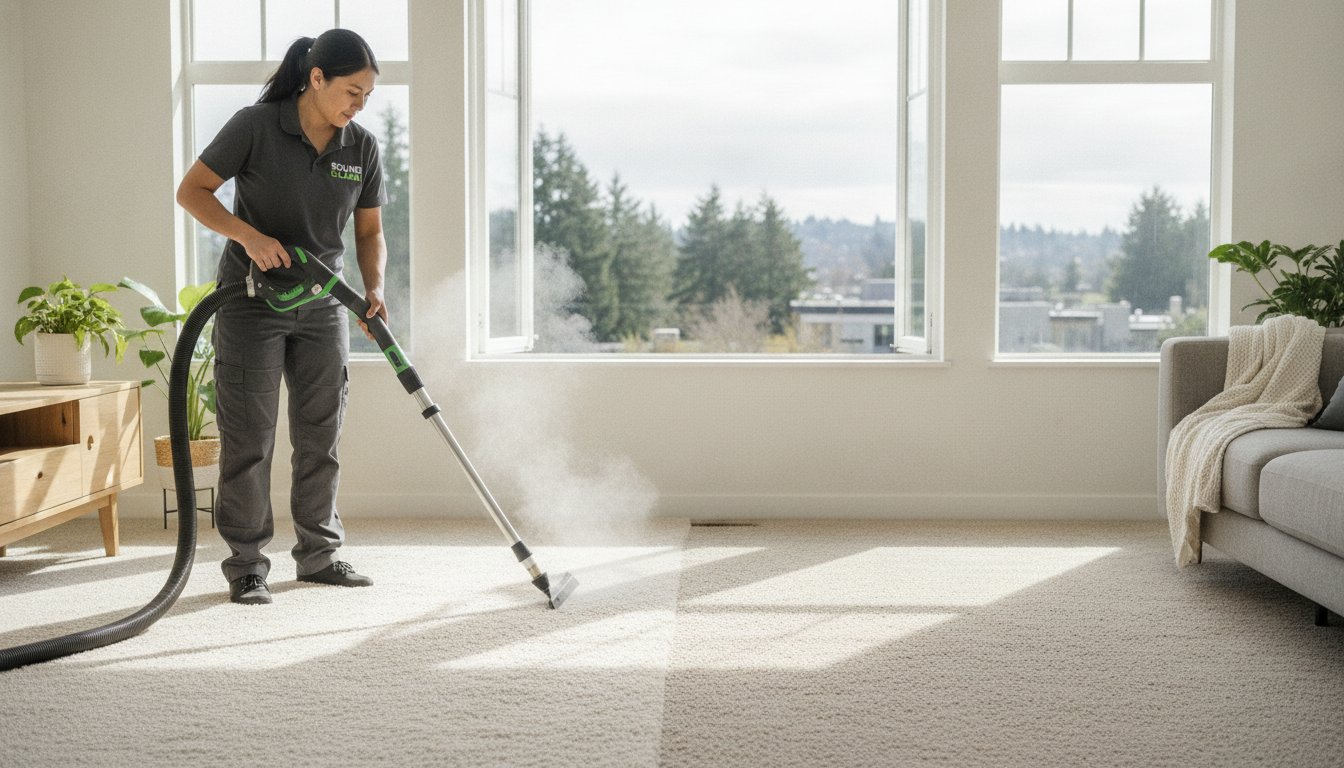
Understanding why carpets re-soil is the first step toward a cleaner home, but implementing a technical solution is what truly preserves your environment. Professional steam extraction, often called hot water extraction, is the industry standard for a reason. While DIY methods rely on heavy soaps, our professional systems use the power of heat to melt away oils. Temperatures exceeding 200°F act as a natural solvent. This heat breaks the bond between sticky contaminants and your carpet fibers, allowing for total removal without leaving a chemical film behind. For larger commercial needs or new builds, RPS Building Services provides specialized post-construction cleaning to ensure these high standards are met in complex environments.
High-standard maintenance is just as critical in the workplace as it is in the home. To see how these professional principles are applied to office and commercial spaces, you can learn more about HERA Cleaning and their dedicated cleaning solutions.
Airflow is equally critical to the process. We measure this in Cubic Feet per Minute (CFM). High CFM from truck-mounted systems ensures that moisture and suspended soil are removed quickly. This is vital in our humid Pacific Northwest climate, where slow drying times can lead to complications. Rapid extraction prevents the capillary action described in the science of carpet wicking, ensuring that deep-seated soils don't travel back to the surface as the carpet dries. At Anderson Carpet & Tile Cleaning, we prioritize your family's health by using eco-friendly, non-toxic rinses that leave zero residue.
The Anderson 5-Step Anti-Residue Process
We follow a structured approach to ensure your carpets stay clean for 6 to 12 months rather than just two weeks:
- Step 1: Pre-treatment. We apply specialized emulsifiers to break down traffic-area oils without over-soaping the pile.
- Step 2: High-temperature extraction. Our truck-mounted units use 200°F+ steam to lift and remove suspended soil.
- Step 3: Neutralizing rinse. We use a pH-balanced rinse to restore the carpet's natural softness and remove any remaining cleaning agents.
Homeowner Maintenance Tips to Prevent Re-soiling
Your daily routine plays a significant role in keeping your home vibrant between professional visits. High-efficiency vacuuming is the most effective way to remove dry soil before it has a chance to grind into the fibers. We also recommend avoiding grocery store 'spot remover' sprays. These often contain high-pH detergents that create a sticky residue, which is a primary reason why carpets re-soil so quickly. For a deep, restorative clean that protects your investment, trust our local experts for Carpet Cleaning in Seattle.
Restore Your Home’s Vibrancy with Expert Care
You don't have to settle for the frustration of sticky fibers or recurring stains that reappear just days after a cleaning. By addressing the chemistry of soap residue and the physics of wicking, you can finally break the cycle of rapid dinginess. Understanding why carpets re-soil allows you to move beyond temporary DIY fixes and choose a technical solution that truly protects your home environment. A deep, restorative clean depends on neutralizing those hidden magnets for dirt and extracting moisture before it can pull old spills back to the surface.
With over 25 years of experience serving Seattle and the Eastside, we bring seasoned expertise to every living space. Our advanced truck-mounted high-heat extraction technology reaches the deep-seated oils that standard machines miss, ensuring a thorough rinse that stays clean longer. We believe in providing peace of mind through eco-friendly, child and pet-safe solutions that prioritize your family’s health and safety. Schedule your residue-free deep clean with Anderson Carpet & Tile Cleaning today! We look forward to helping you enjoy a fresher, more beautiful home that lasts for seasons to come.
Frequently Asked Questions
Why does my carpet feel sticky after I cleaned it myself?
Your carpet feels sticky because concentrated detergent residue was left behind by a low-power rental machine. These DIY units often lack the extraction strength and high temperatures required to fully rinse away the heavy surfactants found in grocery store soaps. This leftover film remains on the fibers and acts as a magnet for new dirt, which is a primary reason why carpets re-soil within just a few weeks of a home cleaning.
How long should I wait for my carpet to dry to prevent wicking?
Most carpets require 6 to 12 hours to dry completely, though Seattle's humid climate can extend this window if you don't maintain proper airflow. To prevent wicking, it's vital to use professional, high-powered extraction that removes moisture from the backing before it can pull deep-seated soil to the surface. We recommend using ceiling fans or opening windows to keep air moving during the first several hours of the drying phase.
Can professional cleaning remove stains that keep coming back?
Professional cleaning can effectively remove recurring stains by targeting the source of the soil trapped in the carpet padding. Our truck-mounted systems use high-heat steam and specialized suction to lift contaminants that portable machines simply can't reach. By neutralizing the pH of the fibers and removing the "iceberg" of dirt beneath the surface, we break the cycle of wicking and ensure those "ghost" stains stay gone for good.
Is it possible to clean carpets without using soap or detergents?
It's possible to clean carpets using high-temperature steam and specialized eco-friendly rinses that leave no soapy residue behind. While traditional methods rely on heavy detergents, modern professional systems use 200°F+ water to emulsify oils naturally. This approach ensures your home stays healthy and safe for children and pets while preventing the sticky buildup that explains why carpets re-soil so quickly after a standard cleaning.


