
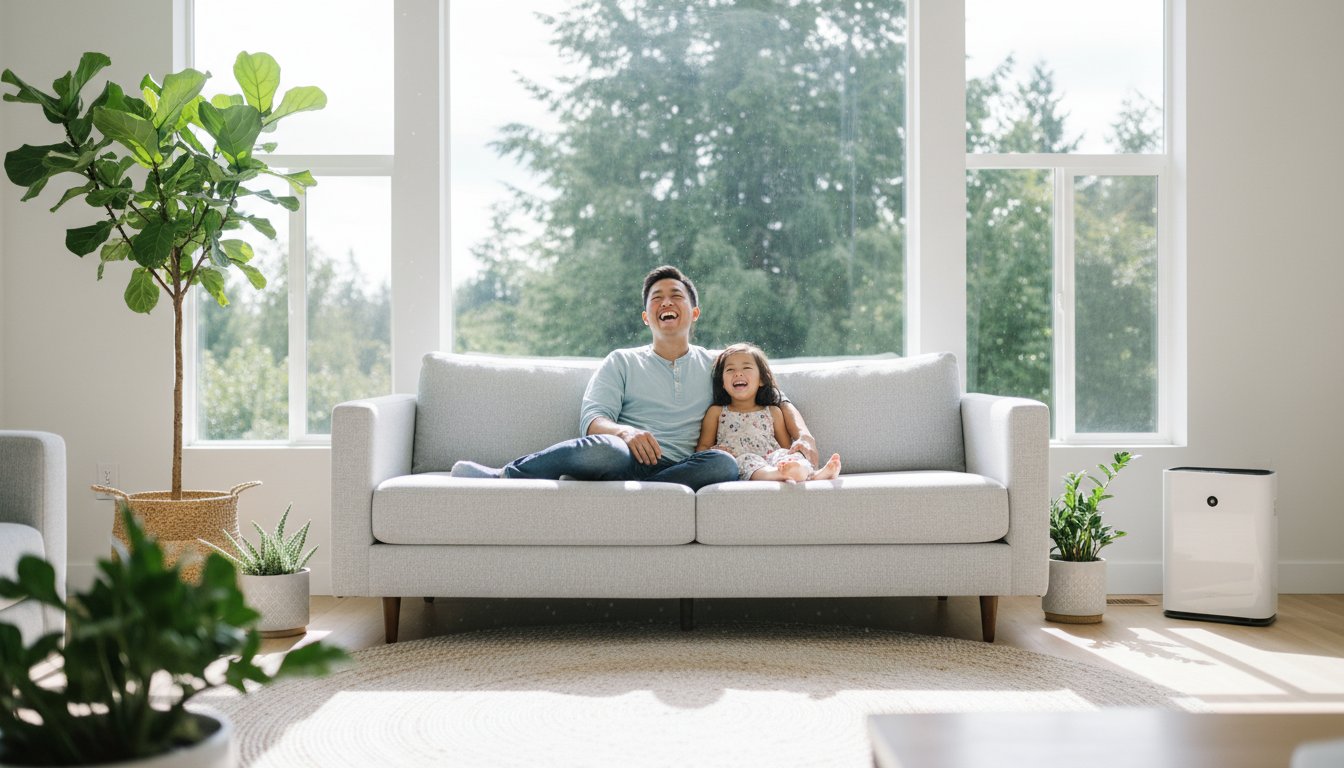
Over 25 percent of adults in the U.S. now live with diagnosed seasonal allergies, a figure that continues to rise as climate change extends pollen seasons by nearly three weeks. For families in our region, the persistent humidity often turns a comfortable couch into a magnet for dust mites, dander, and musty odors. Achieving true allergen removal upholstery requires more than a surface level sweep; it demands a systematic approach to pull deep-seated triggers out of your furniture fibers for good.
We understand how exhausting it is to deal with constant sneezing and itchy eyes while worrying about the harsh chemicals often found in traditional cleaners. You deserve a home that feels like a sanctuary, not a source of discomfort. This guide explores how to identify and neutralize hidden pollutants to create a healthier environment for your loved ones and pets. We will walk through the benefits of high-heat extraction and HEPA filtration, providing you with the knowledge to maintain a scientifically clean home all year long.
Key Takeaways
- Learn how your furniture functions as a giant air filter that traps microscopic particles and bio-load deep within the foam and padding.
- Discover a structured weekly routine for allergen removal upholstery that utilizes HEPA-certified equipment to prevent dust from recirculating.
- Understand the science of high-temperature steam extraction and why 200°F heat is necessary to neutralize resilient dust mite proteins.
- Identify the critical differences between professional truck-mounted suction power and the limited extraction capabilities of standard grocery store rentals.
- Gain actionable insights on maintaining a healthier indoor environment to reduce persistent allergy symptoms for your children and pets.
Identifying the Hidden Allergens in Your Upholstery
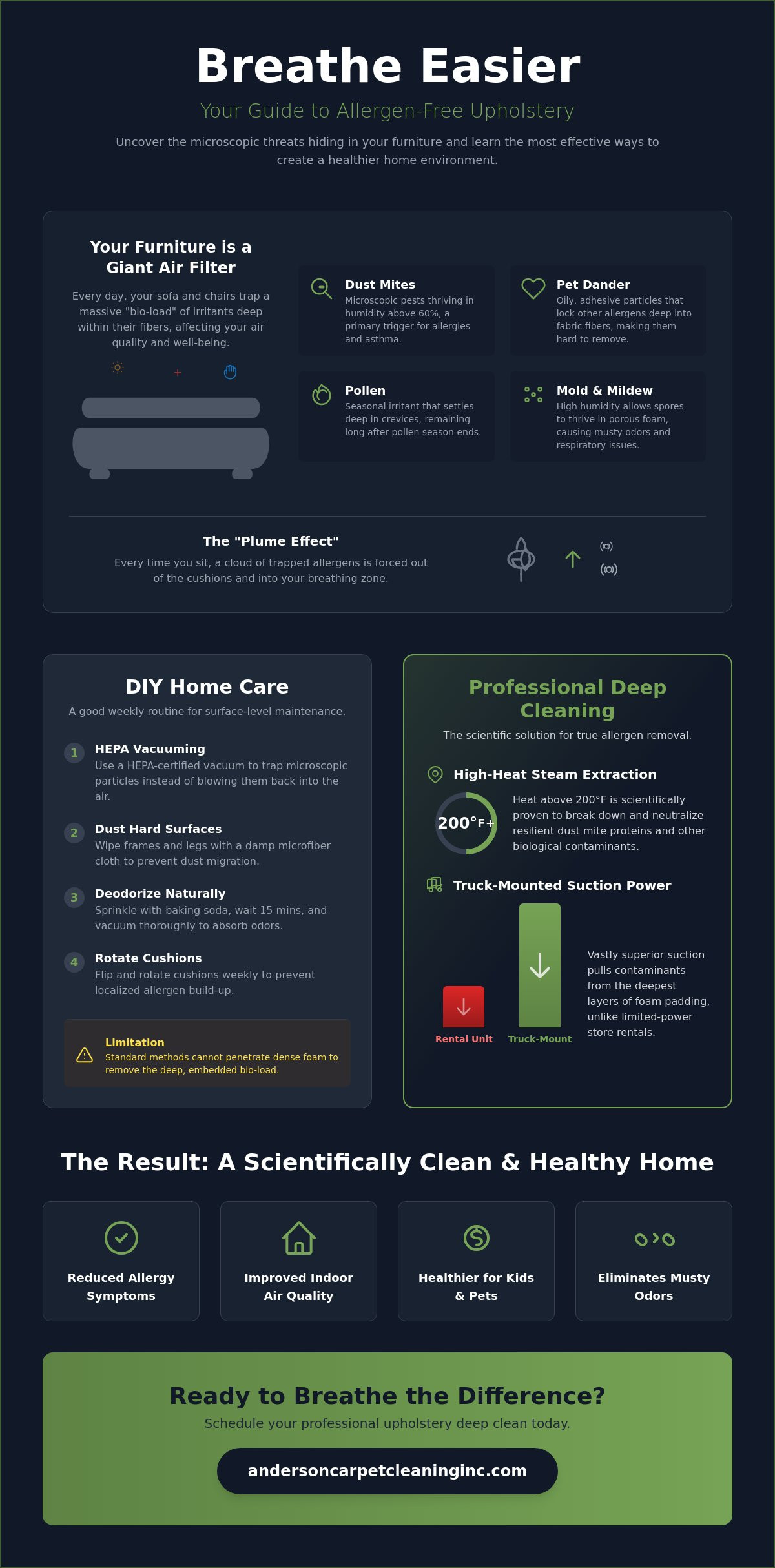
Think of your favorite armchair or sectional as a giant air filter. It doesn't just provide comfort; it actively traps microscopic particles from the air every time you walk by or sit down. Over time, these particles accumulate deep within the fabric and padding. Standard household vacuuming often fails to reach this "bio-load" because typical suction doesn't penetrate the dense foam where allergens reside. In our local Seattle, WA climate, the high humidity levels create a unique challenge for homeowners. Damp air allows mold spores to settle and thrive within porous upholstery fibers, often leading to that persistent musty smell. Allergen load is the total volume of irritants trapped within a cubic inch of fabric.
To better understand how professional extraction addresses these hidden layers, watch this helpful video:
The Big Four: Dust Mites, Dander, Pollen, and Mold
Dust mites are a primary trigger for dust mite allergies, and they thrive when indoor humidity exceeds 60 percent. This is a common occurrence in Western Washington homes. Pet dander adds another layer of difficulty. The natural oils in dander act like an adhesive, locking other allergens into the fibers. During peak seasons, pollen enters through open windows and settles into deep sofa crevices. It remains there until a specialized process for allergen removal upholstery is applied to break that bond and extract the debris.
Why Your Couch Affects Your Indoor Air Quality
Every time you sit down, you create what experts call the "plume effect." This is a microscopic cloud of dust and irritants that is compressed out of the cushions and directly into your breathing zone. If your upholstery is heavily loaded with particles, your home's HVAC filters have to work much harder to keep the air clean. Maintaining clean furniture directly supports the overall health of your air circulation system and ensures your family breathes easier every day.
How to Remove Allergens from Upholstery: A 5-Step Home Care Guide
Creating a healthier living space starts with a consistent routine. While professional deep cleaning is essential, your weekly habits determine how many irritants settle into your cushions between visits. A primary rule for DIY allergen removal upholstery is the low-moisture rule. In damp climates like Redmond, WA, over-saturating fabric can trap moisture in the foam. This often leads to mold growth rather than a clean finish. To allergy-proof your home effectively, you must focus on mechanical removal rather than just surface sprays.
Step-by-Step Maintenance Routine
- Step 1: High-Suction HEPA Vacuuming. Use a specialized upholstery tool to slowly traverse every inch of the fabric. A HEPA-certified vacuum is non-negotiable; it ensures microscopic dander and pollen stay trapped in the machine instead of being blown back into your living room.
- Step 2: Dust the Foundation. Wipe down non-fabric parts like legs and frames with a damp microfiber cloth. This prevents dust from migrating from the hard surfaces onto the fabric.
- Step 3: Deodorize Naturally. Lightly sprinkle baking soda over the fabric and let it sit for 15 minutes to absorb odors. Vacuum it thoroughly afterward to ensure no powdery residue remains to irritate your respiratory system.
- Step 4: Rotate and Flip. Turn your cushions every week. This simple action prevents localized allergen build-up in the spots where you sit most frequently.
Natural Spot Cleaning for Allergen Control
For Step 5, address spills immediately with a pet-safe, non-toxic solution. Mix one cup of distilled water with 1/4 cup of white vinegar and a single teaspoon of mild, scent-free dish soap. Blot, don't rub. This simple action prevents liquid from carrying microscopic dander deeper into the cushion's core where it becomes nearly impossible to reach with household tools. For more detailed advice on preserving your furniture, check out these furniture maintenance tips. If your sofa still feels heavy or smells musty after these steps, our upholstery cleaning experts can help restore that deep-down freshness your family needs.
When DIY Isn’t Enough: The Professional Steam Extraction Solution
While weekly vacuuming helps manage surface dust, it cannot neutralize the microscopic proteins that trigger severe reactions. Achieving true allergen removal upholstery requires high-temperature steam exceeding 200°F. This intense heat is necessary to break down the resilient proteins found in dust mite waste and pet dander. Household machines and grocery store rentals simply cannot reach these temperatures or provide the massive suction power found in truck-mounted systems. High-performance suction is the critical difference between removing the deep-seated bio-load and simply getting the fabric wet.
In damp environments like Seattle, WA, moisture management is vital for a healthy home. Professional equipment ensures quick drying times of just 2 to 4 hours. This rapid evaporation prevents mold spores from colonizing the damp fibers, which is a common risk when using underpowered DIY rentals that leave cushions soggy for days. Viewing professional care as a health-essential maintenance routine helps you Control Indoor Allergens and protect your family's respiratory well-being.
The Anderson Advantage: Non-Toxic and Truck-Mounted
We prioritize the safety of your children and pets by using eco-friendly, residue-free solutions that won't irritate sensitive lungs. Our team brings over 25 years of experience to every home in Bellevue, WA and Redmond, WA. We believe in complete transparency for our neighbors, which is why we provide a detailed upholstery cleaning redmond price guide to help you plan your maintenance without guesswork. Our truck-mounted systems provide the heat and extraction power needed for a scientifically clean result.
Creating a Long-Term Allergy Defense Plan
For families with chronic sensitivities, we recommend professional cleaning intervals every 6 to 12 months. Consistent maintenance prevents the plume effect from becoming a daily health hazard in your living room. Applying a fabric protector after a deep clean also creates a microscopic barrier on the fibers. This barrier prevents future pollen and dander from penetrating deep into the weave, making your weekly home maintenance far more effective for allergen removal upholstery.
Take Control of Your Home’s Health Today
You now have the tools to transform your living room from a collection point for irritants into a true sanctuary. By understanding how your furniture acts as a filter and implementing a consistent HEPA vacuuming routine, you can significantly lower the bio-load in your home. Investing in professional allergen removal upholstery services ensures that even the most stubborn proteins and mold spores are safely extracted from deep within the padding. These steps create a long-term defense plan that protects your family from the persistent sneezing and itchy eyes caused by hidden triggers.
As a woman-owned and family-operated business with over 25 years of local experience, we are dedicated to protecting the health of your indoor environment. Our eco-friendly and non-toxic steam extraction process ensures your family enjoys a scientifically clean home without the worry of harsh chemical residues. It is time to reclaim your comfort and stop the cycle of seasonal discomfort. Breathe easier today; schedule your professional allergen removal in Seattle! We look forward to helping you maintain a fresh and healthy space for years to come.
Frequently Asked Questions
Does steam cleaning actually kill dust mites in furniture?
Yes, high-temperature steam cleaning effectively neutralizes dust mites by reaching temperatures over 200°F. This intense heat breaks down the specific proteins in dust mite waste that trigger allergic reactions. While standard home vacuums only remove surface debris, professional-grade steam extraction penetrates deep into the padding. This process ensures that the biological triggers are destroyed rather than just moved around, providing immediate relief for sensitive family members in your home.
How often should I clean my upholstery if I have severe allergies?
Allergy sufferers should schedule professional cleaning every 6 to 12 months to maintain a healthy environment. If you have indoor pets or live in areas with high seasonal pollen, more frequent service may be necessary to prevent irritants from accumulating. Regular allergen removal upholstery ensures that microscopic particles don't build up to levels that overwhelm your home's air filtration system. This consistent maintenance helps keep your indoor air quality at peak performance throughout the year.
Can I use a rental machine for allergen removal upholstery?
Rental machines are generally insufficient for true allergen removal because they lack the necessary heat and suction power. These portable units often leave fabric excessively damp, which increases the risk of mold growth in our humid Western Washington climate. Professional truck-mounted systems provide the high-temperature extraction required to pull deep-seated particles out of the foam. Without that industrial-strength suction, many allergens remain trapped in the lower layers of your furniture cushions.
Is professional upholstery cleaning safe for my pets and children?
Professional upholstery cleaning is completely safe for your family when you choose a provider that uses non-toxic, eco-friendly solutions. We prioritize residue-free products that effectively remove pollutants without introducing harsh odors or VOCs into your living space. This health-conscious approach ensures that your children and pets can return to the furniture as soon as it is dry. Our commitment to safety means you get a scientifically clean home without compromising your family's well-being.


